2020
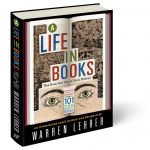
Here is the transcription of an extended conversation between multimedia artist and author Warren Lehrer and Brian Davis (a recent contemporary literature and poetics PhD grad from University of Maryland) that began in February 2020 at Lehrer’s studio in Queens, NY soon after the opening of the exhibition “Warren Lehrer: Books, Animation, Performance, Collaboration” at the Center for Book Arts in Manhattan. They discuss Lehrer’s recent book, Five Oceans in a Teaspoon (2019), a collection of visual poems written by Dennis J Bernstein, visualized by Lehrer, as well as Lehrer’s long running commitments to visual literature and collaborative art going back to the early 1980s. In addition to discussing several of Lehrer’s bookish projects, including his novel A Life in Books (2013), they discuss the different writing and printing technologies Lehrer has worked with and in over the years, as well as current issues in contemporary literature studies, such as documentary aesthetics, autofiction, and satire.
A conversation at a heightened level of intensity, ranging from the aleatory tradition of Emmett Williams, Jackson Mac Low, and John Cage, through post-Poundian poetry and its Chinese influences, kinetic poetry or programmable media where the poem itself is performing, not just the poet. Attention is also given to the Internet as these two literary artists knew it for a very brief moment, before Google and Facebook, circa 2004, "figured out that everybody needed an account."

2019
An Mosaic for Convergence, Charles Bernstein's hypertext essay from ebr Issue 6 in the Winter of 1997-1998, explores the ramifications of a literature that is not structurally challenged, but structurally challenging. By then, Bernstein could sense a shift in literary sensibility, where it was beginning "to seem as natural to think of composing screen by screen rather than page by page." That was a few years after the flourishing of hypertext, but before the internet made reproduction of our print corpus a dominant practice (as e-books, primarily, with very little print/screen interplay or reader/author/programmer interchange). The moment Bernstein describes, and its instantiation on ebr's Alt-X legacy site, seems to the ebr editors something worth preserving - if only as a measure of recognized literary possibilities that have not been realized.
Bernstein's essay is the first of many that will be recovered by ebr co-editor Will Luers, and re-produced in the journal's version 7.0 (circa 2018-2019).
2018
This gathering by Dani Spinosa provides ebr readers with a glimpse into the discussions and debates at the 2018 Arabic E-lit Conference in Dubai.

Adrian Miles (1960 — 2018) was an early theorist, practitioner and teacher of cinematic hypertext and networked, "writerly" video. In memory of his innovative research in these fields, ebr presents this short dialogue between Adrian and founding ebr publisher Mark Amerika. The text is republished from META/DATA: A Digital Poetics, by Mark Amerika, with permission from The MIT Press.

2017
In this review of Henry Turner’s The Corporate Commonwealth, Thomas considers how Turner historicizes the term “corporatization” to explore its wide-ranging definitions and functions in early-modern England.
The Corporate Commonwealth: Pluralism and Political Fictions in England, 1516-1651 Henry Turner, Chicago UP, 2016

In this review of The Power at the End of the Economy, Lestón delineates the theoretical apparatus of Massumi's book and its possible implications.
How might literary databases be seen as alternatives to the commodification of academic scholarship in for profit, subscriber platforms? Scott Rettberg and Joseph Tabbi discuss issues related to instrumentality, the global marketplace, and the digital humanities.

Investigating the question of whether academics should be concerned that Academia.edu is not an educational institution, Johannah Rodgers finds that the answers depend on your definition of “education” and which parties you ask.
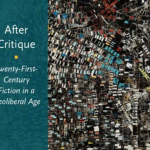
In this review of Mitchum Huehls’ After Critique, Smith situates Huehls' “ontological approach” to the study of contemporary literature as arising from and standing in opposition to the "zombie plague" of neoliberalism.
Analyzing the long and complex history of the term corporation, Turner explores the possibility that the term's roots in the universitasmight serve as a basis for a re-translation and re-valuation of the corporate concept and establish a ground, both discursive and practical, for a reassessment of the “political” as a process of imaginative transformation and collective action.
In a review of the contemporary publishing marketplace in the U.S. and the many definitions of "corporate fiction," Di Leo, editor of the American Book Review, offers some insights into the new economics of digital publishing and how ABR's recent decision to partner with ProjectMuse ended the "online poaching" of the magazine's content.
Jeneen Naji describes Chris Funkhouser’s Press Again and Sonny Rae Tempest’s Famicommunist Poetics as examples of “the UnderAcademy style” begun by Talan Memmott. At the same time, within the context of post-digital publication, Naji explores concepts like "transcreation" and "translation" insofar as the two digital practitioners have conveyed experimental e-texts into print.

In this essay, Robert P. Fletcher demonstrates how, while putting together digital and print media affordances, augmented print may evoke in readers a sense of the uncanny. Fletcher also explains how works such as Amaranth Borsuk’s Abra (2014), Aaron A. Reed and Jacob Garbe’s Ice-Bound (2016) or Stuart Campbell’s Modern Polaxis (2014) seem to demonstrate the existence of a never-ending return of the “familiar” in electronic literature.
In this review of Rethinking the New Medievalism, Matt Cohen ponders the significance of philology's ongoing period of "reflection, [...] refraction, and revisitation." Against the backdrop of contemporary shifts in the humanities, more generally, Cohen sees opportunities for medievalists to intervene, bringing with them both clarity and innovation to fields in a state of fluctuation.
In this essay, Ortega departs from Ulises Carrión’s notion of book as a “spatio-temporal entity” which goes beyond verbal language, in order to demonstrate how hybrid works (or "textual environments") such as Amaranth Borsuk’s Between Page and Screen (2012) may create “new genres and material and poetic expressiveness.” By drawing on Rita Raley’s “TXTual practice,” Ortega also demonstrates how the "material dynamics" displayed by these works decisively contributes to the generation of meaning.
2016
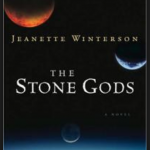
In an attempt to re-materialize postmodernism, Damien Gibson provides, by drawing on material ecocriticism and on the concept of “narrative agency,” a critical posthumanist reading of Jeanette Winterson’s The Stone Gods.
While describing the work of Beckett as deeply influenced by nominalism, Holly Phillips explores “ineffable permutations of intellectual history” and demonstrates how medieval philosophy has deeply influenced twentieth century literature. Simultaneously, Phillips undermines the idea that nominalism’s dismantlement of universals has finally been accomplished by postmodernism.

In an essay spanning modernist and postmodernist poetics, Lynley Edmeades demonstrates how postmodern poetry cultivates “present-ness” by drawing on Lyotard’s concept of “constancy,” Gertrude Stein’s notion of “continuous present” and Caroline Bergvall’s adherence to “non-linearity.”

In this essay, Neil Vallelly answers the question “What is postmodernism?” by demonstrating how disappearance, as envisaged by Jean Baudrillard, “lies at the heart of postmodern theory.” Vallelly also argues for the critical value of postmodernism’s traces in contemporary literature and suggests the adoption of a "methodology that embraces disappearance."