2016
The closing keynote at the Summer 2015 University of Otag0 symposium, "What [in the World] Was Postmodernism," also closes the present collection, here in ebr (December 2016). In December of 2019, McHale's Afterword, Ciccoricco's Introduction and essays by Simon During and Amy Elias will be included in Post-Digital: Dialogues and Debates from electronic book review (Volume 2).

Simon During proposes to unravel the “layered” history of postmodernism in New Zealand. In so doing, the author of this essay treats postmodernism as “an event rather than a period” and describes postmodernism’s development in the epoch of neo-liberalism.
Jacob Edmond argues that while postmodernism might be useless as a theoretical concept or periodization, it nevertheless illuminates changes, both local and global, in the final decades of the twentieth century. Edmond analyzes the uses of postmodernism in the United States, New Zealand, Russia, and China. He shows how the various and even contradictory uses of the term postmodernism allowed it to represent both sides in the unfolding tension between globalization and localism in late twentieth-century culture.
Alexandra Dumitrescu’s essay describes the development of metamodernism in New Zealand and presents metamodernism as an interrogation of “modernist uprootedness or postmodern drifting.”
In this review, Manuel Portela considers Matthew G. Kirschenbaum's Track Changes in light of a "general computerization of the modes of production of writing."
Jen Phillis situates Jessica Pressman's Digital Modernism: Making It New in New Media as a rejoinder to "Neoliberal Tools (and Archives)" by David Allington, Sarah Brouillete, and David Golumbia.
Lisa Swanstrom interviews Matt Kenyon, founding member of S.W.A.M.P. (Studies of Work Atmosphere and Mass Production, co-founded with Doug Easterly), an Associate Professor of Art in the Stamps School of Art and Design at the University of Michigan, and a 2015 TED Fellow.

Katherine Hayles, Hyper and Deep Attention: http://www.jstor.org/stable/25595866?seq=1&cid=pdf-reference#references_tab_contents
In his review of Martin Paul Eve’s Pynchon and Philosophy: Wittgenstein, Foucault and Adorno, Julius Greve situates this new book on Pynchon within the upheavals produced by speculative realism and contemporary discourses on materialism. In doing so, Greve reminds us of what was always already the case: the literary-philosophical relevance of Pynchon, which turns out to be all the more inescapable in contemporary political climates.
In this review of Timothy Morton's Hyperobjects, Robert Seguin contemplates the implication of the text's eponymous subject on art, philosophy, and politics. The "hyperobject," a hypothetical agglomeration of networked interactions with the potential to produce inescapable shifts in the very conditions of existence, emerges as the key consideration for the being in the present.
Originally publication: The Schofield, Issue 1.1 - David Markson & Solitude - Summer 2015 (page 13). Reprinted with permission.
In this analytical, unabashedly philosophical engagement with Alex Galloway's "sneakily-titled" Laruelle Against the Digital, Martin Eve sides with the skeptics for whom "Laruelle proves a better diagnostician of epistemic illness than he is prescriber of a cure."
2015
McKenzie Wark explores the work of Masha Tupitsyn as a pathway into the conditions of life in the 21st Century, somewhere above (or below) the framework of mediated experience, even beyond the limits of what we often call "theory." With Tupitsyn, Wark troubles the current stasis of representation that stultifies thought in this age of unrepentantly industrialized culture, not by turning us away from the spectacle, but by smashing right through it, picking up its pieces, and discovering new things in the wreckage.
Steve Tomasula discusses the development and context of his work (and TOC in particular), including relations to print and electronic literature, in this interview with Kiki Benzon.
By working through the resemblances between Tomasula's Vas: An Opera in Flatland (2004) and Edward Abbott's much earlier Flatland (1884), Pham-Thanh establishes how Tomasula "orchestrates the downfall of the traditional hegemonic masculinity" that defined Abbott's time.
In this riposte to Herbrechter, John Bruni suggests that the pivot from humanism to posthumanism is not without peril. Thus, Bruni enjoins readers, even as the posthuman discourse incorporates them into its post-anthropocentric milieu, to “watch the critters” as the machine of capitalism trudges ever onward.
2014
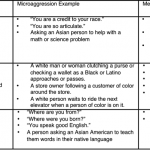
The authors discuss their effort to raise critical awareness about microaggressive racist behavior with Mimesis, an interactive game set in an underwater environment where players become sea creatures, and where they feel the social force of microaggression regardless of the their race or ethnicity.
At the Frankfurt Book Fair, Ed Finn and his team attempted to "write, edit, and publish a book in three days." In this essay, Finn explains the process, outcomes, and future considerations of that collaborative experiment in writing, reading, and publishing in parallel and as performance, in the same room at the same time, as he attempts to answer the question, "What is the future of publishing?"