2026
In his speech from Joseph Tabbi's festschrift in May 2025, Daniel Johannes Rosnes discusses his brief time spent working with Tabbi, covering the trust and responsibility he was immediately offered to the importance of Tabbi's view of publishing as a collaborative effort, formed by a "network of people".
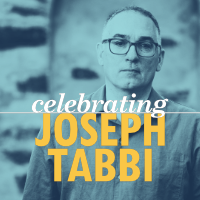
Taking a trip to the first page of publications available on the current ebr website, Cary Wolfe frames electronic book review as an overlapping network of people connected over a lifetime by Joseph Tabbi. A network Wolfe himself became involved with after spotting a magazine notice in the 1990s.
Jan Baetans delivers a personal message to ebr's co-founder and long-time editor-in-chief, Joseph Tabbi, celebrating his retirement. Describing Tabbi as "the ideal today of the digital humanities," Baetans celebrates Tabbi's ability to synergize traditional humanities methods with the digital turn.
In a print version of his speech given at Joseph Tabbi's festschrift, Nick Montfort discusses Tabbi’s instrumental role in the understanding of index-card-based composition and collaborative glossary development. In doing so, Montfort both contrasts and connects these two disparate means of writing, while arguing that Tabbi led a second life as a cyberpunk, thanks to the founding of ebr.
Continuing the celebration of Joseph Tabbi's work, John Cayley discusses Tabbi's foresight and ability to gather his peers together, which led to the creation of vital knowledge infrastructure for the blossoming field of electronic literature.
N. Katherine Hayles, in a personal contribution to the Celebrating Joseph Tabbi gathering, details the many ways her and Tabbi's paths have crossed over the decades. Noting the changes she's observed in Tabbi over time, Hayles reflects on the positive outcomes of aging.
In her speech, originally given at Joseph Tabbi’s festschrift, Tegan Pyke details how she met Tabbi and became a part of two of his key knowledge infrastructure projects. Discussing Tabbi’s innate ability to connect with people and collaborate, Pyke frames community building as a vital part of Tabbi’s academic legacy.
In a brief, personal message to Joseph Tabbi, Søren Bro Pold reflects on the many ways Tabbi contributed to the academic community surrounding electronic literature and the importance of electronic book review as a lasting arena for open discussion in an age of closed platforms.
In ebr co-founder Mark Amerika's speech from Joseph Tabbi's festschrift—originally given at the University of Bergen, Norway—Amerika explores the founding of electronic book review, the radical foresight Tabbi provided, and the journal’s links to post-publishing practice. As part of this, Amerika poses Tabbi's legacy not as something fixed, but as a challenge of continuing reconceptualization.
In his opening speech at Joseph Tabbi's festschrift, Scott Rettberg details Tabbi's journey through academia, his many achievements, and the projects he founded. Rettberg also reflects on his friendship with Tabbi, which started in Chicago in 1999 and, over the decades, has spanned the globe and numerous life events.
In this essay, David Ciccoricco reflects on his early challenges in the then-emerging field of electronic literature and the pivotal role Joseph Tabbi played in Ciccoricco’s studies. In doing so, Ciccoricco sees the similarities between his and Tabbi’s thinking. Namely, that literary narratives create a reciprocal loop between media and cognition.
2019
Between the manifesto and the treatise, the text and the paratext, the theoretical and the poetic, the aphoristic and the systematic: Manuel Portela situates the "expressive richness" of Johanna Drucker's "General Theory," and its critique of present social and political formations.
2016
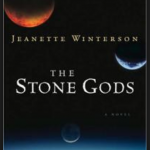
In an attempt to re-materialize postmodernism, Damien Gibson provides, by drawing on material ecocriticism and on the concept of “narrative agency,” a critical posthumanist reading of Jeanette Winterson’s The Stone Gods.
While describing the work of Beckett as deeply influenced by nominalism, Holly Phillips explores “ineffable permutations of intellectual history” and demonstrates how medieval philosophy has deeply influenced twentieth century literature. Simultaneously, Phillips undermines the idea that nominalism’s dismantlement of universals has finally been accomplished by postmodernism.

In an essay spanning modernist and postmodernist poetics, Lynley Edmeades demonstrates how postmodern poetry cultivates “present-ness” by drawing on Lyotard’s concept of “constancy,” Gertrude Stein’s notion of “continuous present” and Caroline Bergvall’s adherence to “non-linearity.”

In this essay, Neil Vallelly answers the question “What is postmodernism?” by demonstrating how disappearance, as envisaged by Jean Baudrillard, “lies at the heart of postmodern theory.” Vallelly also argues for the critical value of postmodernism’s traces in contemporary literature and suggests the adoption of a "methodology that embraces disappearance."

The closing keynote at the Summer 2015 University of Otag0 symposium, "What [in the World] Was Postmodernism," also closes the present collection, here in ebr (December 2016). In December of 2019, McHale's Afterword, Ciccoricco's Introduction and essays by Simon During and Amy Elias will be included in Post-Digital: Dialogues and Debates from electronic book review (Volume 2).

Simon During proposes to unravel the “layered” history of postmodernism in New Zealand. In so doing, the author of this essay treats postmodernism as “an event rather than a period” and describes postmodernism’s development in the epoch of neo-liberalism.

Jacob Edmond argues that while postmodernism might be useless as a theoretical concept or periodization, it nevertheless illuminates changes, both local and global, in the final decades of the twentieth century. Edmond analyzes the uses of postmodernism in the United States, New Zealand, Russia, and China. He shows how the various and even contradictory uses of the term postmodernism allowed it to represent both sides in the unfolding tension between globalization and localism in late twentieth-century culture.
An Introduction to the gathering.