2024
Drew Keller, Microsoft employee and graduate of the Digital Culture program at the University of Bergen joins Scott Rettberg to talk about the potential role of AI in our media production. From the Jacquard loom to the PowerPoint designer, human creativity has always been intertwined with technology, but is the rapid increase in AI a revolution in the way we produce media, or just another tool?

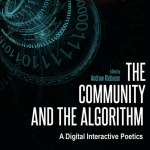
Daniel Punday reviews Andrew Klobucar’s edited collection of essays, The Community and the Algorithm: A Digital Interactive Poetics.
2023
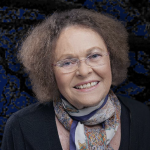
EBR would like to express thanks to Dene Grigar and Deena Larsen at Washington State University Vancouver, for organizing and hosting a memoriam for Marjorie C. Luesebrink and for letting us share the memoriam in our journal.
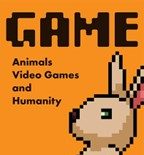
What can video games teach us about our relationship with animals? Hanna Hellesø Lauvli's review of GAME by Tom Tyler urges us to see life from the other side of the food chain.
Returning to past formats in the electronic book review such as 'designwriting from the mid-1990s,' ebr co-editor Lai-Tze Fan alerts readers to a feature that is as much a part of our journal's publication, and positioning, as the essays themselves. As annotations in the margins of print texts allow readers to reference earlier texts, a more interactive, intertextual and perhaps more accessible conversation is made available within and among digital texts.
Multimodal AI trained on YouTube-TikTok-Netflix (object-segmented and identified audio-video-speech) and public domain science data (that exceeds the spectrum of human sensorial field) will be grounded in a world that is in some ways vaster than that experienced by a single human neurophysiology.
Scott Rettberg, director of the Center for Digital Narrative is joined by journalist and Digital Culture graduate Ashleigh Steele to talk about memes, post-truth and the way narrativity shapes our understanding of ourselves and our world. We are increasingly affected by algorithms, AI and conspiracy theories, but what kind of effect does this have on our discourse, and how do we fight back?

The editors at ebr asked Bobby Arellano to draft a reflection on the passing of George Landow. Working with Landow in the early years of the Victorian Web, Arellano transferred most of the documents from the Intermedia system into Storyspace and relinked them. We present Arellano's reflection, in memoriam, along with an official obit provided by Ruth Landow (George's friend of 78 years and his wife of 57 years).
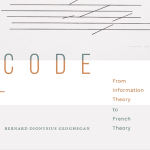
Is it possible to discover digital prophecies in thinkers like Lacan, Barthes, Derrida, Foucault, Deleuze, and Baudrillard? Heckman has a go at it in this close reading of Dionysius Geoghegan's Code: From Information Theory to French Theory.
On this episode of Off Center, Scott Rettberg is joined by artist and poet Jason Nelson to discuss the background behind Jason's weird and intriguing work, creativity in the digital age and the intersection between art and research. Behind every artist there is a story, and Jason's include disappearing masonic rings, Brazilian televangelists and city planning.

CDN Director Scott Rettberg and the Center's Principle Investigator Joseph Tabbi discuss the decades-long development of a born-digital, community based publication. The Electronic Book Review brings together literary scholars and conceptual artists from a widening set of disciplines and geographical regions. While foregrounding critical discourse, the journal will bring to our readership the sorts of activities that we'll be featuring in our e-lit node: activities which we designate as a Publishing And Infrastructure Group (PAIG). As our readers pick up on things that our authors have written, they too become an active part of our discursive community. Debates and dialogues are thus the order of the day, as authors and audiences begin to merge.

Rob Wittig and Harlin/Hayley Steele — a larpmaker and media artist whose work explores tactical performance and “narrative care,” a collaborative process of excavating narratives that have been pushed underground through systematic forms of harm — discuss Harlin/Hayley’s roots in the live action roleplaying (LARP) world and synergies between LARP and netprov. While laughing a lot.
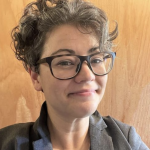
A post-closing catalog essay on a curious and original exhibition, one that rethinks the very idea of a group show, from singular research journeys by Kate Collyer (not her first) to Alaska, Megan Porpeglia to Sardinia (on a residency for the first time visiting her family roots), and Lorrie Fredette to Cape Cod. Like McElroy's own literary works, these twenty-two artworks are presented through several shifting lenses.

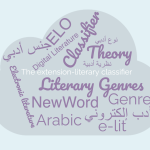
Reham Hosny (University of Cambridge and Minia University) asserts that works of e-lit resist straightforward classification due to their "hybrid and mosaic nature." This complexity poses formidable hurdles in the development of computational models aimed at categorizing e-lit into distinct genres. The challenge is further compounded by issues such as media format obsolescence, ephemerality, interactivity, and the wide array of manifestations across different platforms. Despite these formidable challenges, Hosny not only explores potential solutions but also provides a comprehensive framework for understanding the core issues associated with the classification of e-lit.
Accepting Søren Bro Pold's proclamation that "the social knowledge base of the University has already disappeared", Davin Heckman locates a few, forward looking prospects for a reconstruction of the Humanities in Jean-François Lyotard's "famously sloppy" Postmodern Condition (1971), Hannah Arendt's Human Condition(1958), and Imanuel Kant's prescient hope that the University could serve as a "mediating nexus among a growing array of conflicting professional tendencies."
Martin reviews Astrid Ensslin's Pre-Web Digital Publishing and the Lore of Electronic Literature, a book that addresses the knowledge gaps surrounding the early era of digital creation and publishing, while testifying to the necessity for multidisciplinary approaches to this field of study. Martin discusses the reconstructivist stance from which Ensslin labors to embed digital literature into our larger understanding of the literary arts.

Scott and Jill Retberg, directors of the Center for Digital Narrative (CDN) at the University of Bergen, discuss their motivations and goals for the new research center. Digital narrative encompasses various fields such as electronic literature, game studies, AI, VR, social media narratives, and computational narrative systems. The podcast aims to explore the frontiers of digital narrative by engaging with researchers, artists, and authors in these fields. CDN aims both to produce new research and creation in digital narrative and to present ideas in a more accessible way, such as through exhibitions and popular forms of publication to reach a broader audience. The Off Center podcast is a released on a biweekly basis, and we will be releasing selected transcripts each month on ebr.
In this anticipation of John Cayley's ebr essay on Artificial Intelligence, Scott Rettberg contextualizes some of the ethical and systemic problems of ChatGPT and argues that works of electronic literature and digital art might serve as tutor texts for understanding effects of technological mediation on humanity.

On this first Sunday in July 2023, as the Electronic Literature Organization prepares for its meeting in Coimbra, Portugal, we present a set of reflections by four ELO members who co-organized this Organization's 2021 conference fully virtual conference, titled "Platform (Post?) Pandemic." What we have is an insightful critique of platform conferencing. The concepts of datarama turned dadarama offer a refreshingly literary way of reorienting the discourse of the ELO's annual conference.