2025
The electronic book review Editorial Team discusses electronic book review's 30th anniversary, the journal's position at the junctures of multiple academic disciplines, the threat of an increasingly turbulent global stage, and the aspiration to continue providing a home for a future defined by resistance and unity.
2024
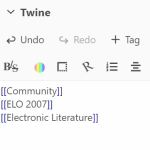
In a keynote delivered at ELO 2024, Chris Klimas recounts ELO 2007 and the creation of Twine. In doing so, he highlights the importance of community and open-source software in fostering digital creativity, while pondering the possibility of a platform dark forest.
Marino and Berry discuss their engagement in weekly conversations about the nature of "code, of ELIZA, its descendants" and how each of these programs have circulated within our critical code culture, along with other "contemporary conversation agents like Siri and ALEXA and, of course, ChatGPT."
Scott Rettberg and Robert Arellano's collection of interviews "with critics, creative writers, students, and friends of Coover" to commemorate the passing of one of the pioneers in electronic literature.
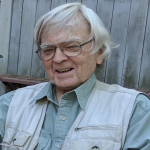
John Cayley commemorates Robert Coover, a prolific writer and one of the first supporters of digital writing and writing with computation who in the 1990s began teaching courses in hypermedia (with George Landow) at Brown University. This obituary was originally composed for communities associated with Brown University, Providence, Rhode Island, within which Coover lived and worked for almost a half century, and where John Cayley is Professor of Literary Arts.
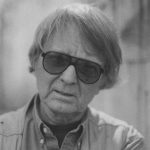
Managing Editor Anna Nacher recollects the past — and sketches out the future of ebr.

Rob Wittig chats with William Gillespie about working with constraints and word plays, all the while emphasizing the netprov’s community building potential (a particularly big ellipsis needed, anyone?)

A survey of Gaddis’s known and archived unpublished creative work in poetry and drama, from a parodic Elizabethan play and the complete script of Once at Antietam to a full western film screenplay and a year of failed pitches for TV drama. Each entry contains archival location information, historical information, description and analysis of the archived work, and discussion of any connection to the eventually published fiction.
A survey of Gaddis’s known and archived unpublished prose fiction, particularly short stories from before The Recognitions and incomplete forerunner projects for his eventually published novels. Those include the two aborted novels that evolved into The Recognitions, notes toward a projected novel about filmmaking that provided foundational material for Carpenter’s Gothic and A Frolic of His Own, and more. Each entry contains archival location information, historical information, description and analysis of the archived work, and discussion of any connection to the eventually published fiction.
Kate Michelson Goldkamp surveys the Juvenilia preserved in Gaddis’s archive, finding, among other things, early prefigurations of his “delight[] in the macabre” in some illustrated mini-stories, hints of the boy JR's worldview in studies of US geography, and doodles that prefigure some of the published fiction’s hand-drawn illustrations.
Translator Francine Ozaki reads The Recognitions through the overarching debates of twentieth-century translation theory, finding the conflict between Wyatt’s and Otto’s handling of Forgery, Originality, and Authenticity illuminating the concerns of today's professional translators. Questions of credit, treachery, allegiance, payment, and dependency are so fully addressed in the novel that translators and translation theorists should be reading it to help make sense of their own artistic and professional roles.
Scott Zieher offers some creative non-fiction in praise of perhaps Gaddis’s least-lauded publication: the lavishly illustrated and sample-provisioned “masterwork of printed ephemera” A Pile Fabric Primer. How did this mysterious document come to be, and what does it tell us about the creative writer's working conditions?
Cole Fishman argues that Gaddis should be recognized for his contributions to philosophy, no matter what the "disciplinary gatekeepers" think.
Jon Fain studied creative writing with William Gaddis at Bard College between 1976 and 1978, during Gaddis’s first university teaching job. It didn’t go perfectly, as Fain discusses in this retrospective, which includes a letter of Gaddis’s writing-feedback.
This roundtable discussion of translating William Gaddis's fiction, with Spanish translator Mariano Peyrou, Portugese translator Francine Osaki, and Ukrainian translator Max Nestelieiev, took place online on September 3rd 2023. Russian translator Sergey Karpov and Japanese translator Yoshihiko Kihara, unable to join on that day, sent written responses to some of the roundtable questions, which have been incorporated below where the relevant question was asked. The transcript has been reviewed, annotated, and lightly edited for clarity and cohesion by roundtable moderator, Marie Fahd.
This roundtable discussion took place online in August 2023: it has been lightly edited for focus and clarity. The Chair was Ali Chetwynd, with Jeff Bursey, Victoria Harding, Chad Post, Edwin Turner, Chris Via as speakers. More about each participant, including links to their individual projects, can be found in their electronic book review author biographies.
A personal recitation of Paul Ingendaay's career as a "lifelong" associate editor with the Frankfurter Allgemeine. Ingendaay also shares with us a recollection of the slow, belated but definitive situation of Gaddis's lifework in the German literary canon.
Mark Madigan shares a photograph of William Gaddis, captured by John Puleio, during one of his largely improvised lectures.
Moody's interview is a story about how stories get published, the people who publish, and the perils of single-copy print manuscripts moving through FedEx prior to digital tracking, as well as: "a snapshot of the intricacies of culture as a whole". As an insider perspective on how literary influence operates to perpetuate a continuum, this interview contributes to our awareness of how 'maximalist' bravura epic-comic literature emerges from mimesis and adoration to seed lineage canons (Keaton, Beckett, Pynchon, Gaddis, Moody).
This roundtable discussion chaired by Ali Chetwynd, featuring artists Stef Aerts, Thomas Verstraeten, David Bird, Edward Holland, and Tim Youd took place at the Gaddis Centenary Conference in St Louis, on October 21st 2022. It has been lightly edited for clarity. Transcript by Marie Fahd.