2018
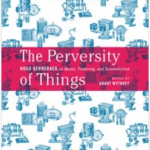
A timely revaluation of Hugo Gernsback, the Luxembourgish-American tinkerer who regarded science fiction not merely as a literary form or fantastic escape, but also, according to Grant Wythoff, as a way for readers to interact with and reflect on media and (not least) to know where tools can be found to gather knowledge on their own. More of a community of tinkerers than a literary movement or social media network, Gernsback's early and amateurish engagements with technology can help us to gauge what is lost in the transition to corporatist black boxery.
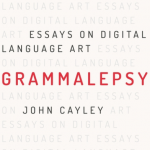
Cayley's book, Grammalepsy, is the first in the Bloomsbury series on Electronic Literature, due out this year (2018). A symptom of language whose therapeutic potentialities are passed over by commercial digitization, the term “Grammalepsy” suggests a lapse in designation. Cayley's book can remind us of the generative difference in any act of signification, in writing on a page no less than coding on silicon. There is no reason why the latter, so different from our neurological circuits, should be any better than any other conventional designation at encapsulating and communicating thought. The fact that literary theorists (and also digital makers like Cayley) place their work and thought self-consciously in the margins of what is now a digital consensus, suggests the presence of a long-standing (and continuing) literary counter-history to the Digital Humanities, that are too often characterized by datafication, single-entendre designation, and instrumentalist tendencies.
In a paper presented at the “Arabic Electronic Literature" conference in Dubai (February, 2018), N. Katherine Hayles considers born digital writing as a cognitive assemblage of technical devices and readerly, interpretive activity.
This essay has been reprinted from the journal CounterText (2.2) by permission of Edinburgh University Press.
A first draft of this essay was presented at the 2017 ELO Conference at Porto, in a panel organized by the "Nar-Trans" group of the University of Granada.

Even as the first biography of Kathy Acker appears, we have word of a newly assembled Acker archive in Cologne, under the curatorship of Daniel Schulz. The gist of which, could be to re-orient Acker's personal relationships to "the politics inherent in Acker's life."

"[T]ranslation is merely a preliminary way of coming to terms with the foreignness of languages to each other." (Walter Benjamin, "The Task of the Translator" [1921])
Instead of simply reviewing Vibrant Matter byJane Bennett (Duke 2010), author Dale Enggass applies Bennett's "Political Ecology of Things" to longstanding (and not yet resolved) themes of salvation, materialism and transcendence in Melville's Moby-Dick and Pamela Lu's Ambient Parking Lot.
Bergthaller's essay originally appeared in the collection, Ecological Thought in Germany. It is reprinted here, with permissions from Lexington Books, as part of an ebr gathering on Natural Media (December 2019).

Addressing a lacuna in games studies, Jason Lajoie makes a case for why a queer games studies is needed, and he shows how these two areas of study are united in Bonnie Ruberg's and Adrienne Shaw's collection.
What binds literature, electronic literature and games is "the shaping and networking of the imagination." Drawing on the ideas of Damasio, Walton and Sartre, Gordon Calleja looks at the synthesizing role of the imagination in narrative indie games.
Beginning as a talk delivered at the National University of Kyiv-Mohyla Academy, Ukraine May 17, 2017, now edited and amplified for publication in the electronic book review and the 2018 collection of ebr essays forthcoming from Bloomsbury Press.
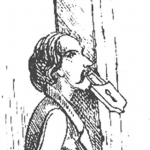
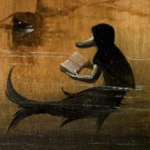
Repetition, gestural abstraction and depictions of noise; anabsence of narrative causation, a multiplicity of micro-narratives and opacity of material communications: The digital narrativity observed and created by Will Luers is equally applicable to the films of Stanley Kubrick or the paintings of Hieronymous Bosch - which implies a longer continuity (and less radical transformation?) than we might have expected. Indeed, Luers argues that "networks and nonlinear systems" might better be understood as "something deep in our brains," even as narrative may be regarded "as a necessary construct, but not the complete picture of reality."
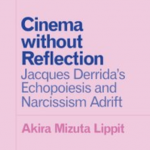
If it's true, as Leiya Lee argues, that Akira Mizuta Lippit turns Derridean theory into a system, then it's a system grounded in ghostly presences (not least Derrida's own presence in film).
2017
"More is not necessarily more. Faster is not necessarily better. Big data is not necessarily better." In the effort to capture and make available data about people, digital humanities scholars must now weigh the decisions of what and what not to share. Geoffrey Rockwell and Bettina Berendt address the new ethical issues around “datafication” in an age of surveillance.

A review of Aesthetic**Animism, so vulnerably personal, and at the same time so pragmatically organized, that it might just suggest a possible future for scholarly and creative scholarship: a digital practice that (in Jhave's words) "distends selves towards collectivities that remind it of oblivion." For the moment, that inevitability is avoided by the book's receipt of the 2017 N. Katherine Hayles Award for Criticism of Electronic Literature.

"Even among the Greeks and Romans, the most advanced nations of antiquity, money reaches its full development, which is presupposed in modern bourgeois society, only in the period of disintegration."- Karl Marx, Introduction to A Contribution to the Critique of Political Economy
Though scholars of literature and the arts remain skeptical, Strunk explores some of the ways "videogames are making the transition into being objects worthy of artistic attention."
Reflecting on the genealogy and histories of "transgressive textualities" and text generators, Aquilina offers readings of texts by Swift, Dahl, Orwell, and Borges to consider the terms and issues involved in situating text generators as transgressive.

In her discussion of the textual, technical, and figurative characteristics of Graham Allen’s Holes (2017), Karhio “argues that [Allen's text] is not a landscape poem in the customary sense” and explores the ways in which the digital platforms deployed in the project’s creation and publication contribute to the signifying structures that “challenge the idea of landscape as symbolic representation of the inner world of the speaking subject.”