2022
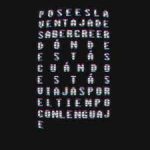
For Saint Augustine, biblical scripture was indispensible to his being able to finish the final draft of his life story. Hemingway advocated stopping midway in a sentence, to ensure a fresh start tomorrow. For us today in the age of algorithmic governance, our stories are more likely to be generated continuously through the words of others using Google search, autocomplete and the algorithm’s statistically-informed guess. In this article, Fernanda Mugica explores the real time writing in charly.gr’s Peronismo (spam), from 2010, a visual poem that combines music and text; Matías Buonfrate's “No poseas un miedo” (2020); and Argentine poet Francisco López Merino's C0d3 P03try.
Building on the work of Souvik Mukherjee (2017), T. Shanmugapriya and Nirmala Menon (2018, 2019), Samya Brata Roy identifies emergent elements of a multimodal E-Lit tradition in India.
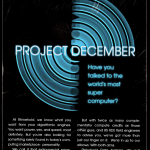
Alex Mitchell (leader of the Narrative and Play Research Group at the National University of Singapore) shows how, while generative text adventure AI Dungeon allows players to uncritically interact with the AI system as they co-create a story, Project December instead primes the player for reflection and interpretation. Unlike most digital games, which emphasize immersion, this brings forward the problematic nature of their technology platforms: foregrounding rather than normalizing the strangeness of the experience, or even generating a kind of "spooky magic," as Project December creator Jason Rohrer puts it.
2021
Bruce Clarke focuses transhumanism through the dialects of a neocybernetic systems theory (NST). As Clarke explores the dynamics of a NST, he outlines important components of the AI Imaginary—or, the theoretical and mediated discussions of intelligent technologies--in order to explore how machines, humans, and systems can work together. Specifically, he presents Kim Stanley Robinson’s novel Aurora (2015), as an exception to the AI Imaginary in its representation of “a solidarity that regathers rather than alienates human and machine beings.”
In his essay, Malthe Stavning Erslev approaches the notion of post-digital from the perspective of a broader cultural phenomenon of posterioriy, emphasizing the fact that the prefix post- still allows for discussion of multidirectional and complex changes that our world is currently undergoing. In order to better grasp all the complexities and interrogate somewhat linear periodization implied by the prefix, Erslev employs the oxymoronic concept of contemporary posterity. At the same time, he ties his theoretical proposition with the extensive analysis of an online community engaging in bot-mimicry.

Building on their concept of metainterface, Søren Bro Pold and Christian Ulrik Andersen analyze the change in perception and experience that bring forth the always-on(line) mode of engaging with digital content. The notion of ‘spectacle’, in itself having a long history in critical theory, is employed here to discuss media politics and the struggle for power in terms of aesthetized computation, with their main driving forces being data analytics, surveillance and forensics. Pold and Andersen uncover how metainterface spectacle can also serve to empower political agency through reclaiming the apparatus.

With a focus on sound elements in the e-literary, Hannah Ackermans (University of Bergen, Norway) insightfully traces the role of accessibility and (dis)ability in electronic literature. Problematizing the universality of electronic literature practices and rewriting the familiar concepts (such as defamiliarization or constraint), she uses the notion of accessibility as a perspective that both proposes inclusive models of electronic literature and helps to understand creative work on a fundamental, material level.
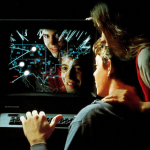
In her essay “Is this a game, or is it real?”, Naomi Mandel revisits WarGames, a 1983 film that significantly shaped the popular imagination of computer games and military networked technology at the time. Mandel argues that the film prompts a non-mimetic reading that emphasizes deeper, infrastructural and operational meanings of the screen. Placing it in the context of the history of computer games, Mandel points out that WarGames anticipates the evolution of the medium by playing with distinctions between real world and game, and questioning whether such distinction matters at all.
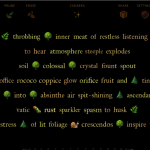
Literary forms seen as tools of mind transgressing the field of the literary and repurposing digital media so that they are capable of refocusing cognition in beneficial ways – these are the lines of thought shaping Kyle Booten’s analysis of algorithmic co-writers. To be able to respond to both challenges, it is proposed that researchers rigorously and systemically study how digital tools are being creatively used and repurposed, learning from models that have emerged within the mainstream Human-Computer Interaction research.
In a study that traverses more than half a century – going from e-lit precursor Christopher Strachey’s M.U.C. Love Letter Generator (1952) to Michael Joyce’s experimental hypertext afternoon: a story (1990) to Kate Pullinger’s data-driven touchscreen work Breathe (2018) – Rettberg (University of Bergen, Norway) situates experimentation with digital interfaces in a longer tradition of innovation in literary and scholarly production. She also argues for the central importance of such experimentation in the ongoing development of both electronic literature and the digital humanities, suggesting that speculation in the design of digital interfaces can help preserve and extend the interpretative and intuitive aspects of Western literary and scholarly traditions, while also bringing the limitations and exclusions of such knowledge systems into focus.
In this conversation and accompanying "How to Not" guide, Drs. Lai-Tze Fan, Kishonna Gray, and Aynur Kadir consider responsible theories and methods towards racial equity, racial justice, and anti-racism in game design. Their main focus is on how games can provide a platform for helping people understand and learn about these issues.
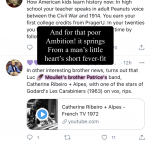
To browse the internet is to subject oneself to sophisticated and unceasing techniques of attention-capture, of which the pop-up advertisement is only the most crass and vexatious example. This paper describes the development of Nightingale, a web browser extension that fights distraction with distraction. It does this by injecting the web with pop-up ads consisting of semantically-relevant fragments of the poetry of Keats. Nightingale represents an attempt to engage in “noöhacking”—that is, repurposing the cognitively-destructive aspects of contemporary digital media in order to care for one’s own mind.’
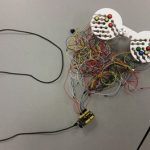
This essay explores intersections among queer theory, critical making methodology and inclusive design through a research creation piece that aims to problematize normative video game controller schemes.
In this article, Kelsey Cameron and Jessica FitzPatrick propose attunement, a conceptual intervention that returns lived experience to critical making. They argue for attunement in three areas: disciplinary recognition of making, labs and other university maker spaces, and campus-community engagement. Attunement helps bring equity into critical making, highlighting how larger systems shape individual acts of making.

FEATURED ARTIST: In this essay, Caitlin Fisher reflects on the ideas, processes, and approaches that have shaped and influenced her work in digital storytelling and electronic literature for over 25 years. She invokes theorists like Borges, Haraway, and Aristotle and critical concepts of hybridity, string theory, hypermedia, and spatial narratives to illuminate readers about the simultaneous timelines, continuity, and forking paths that run through the river of her work.
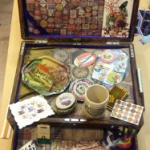
Burdick situates the speculative software prototypes of Trina: A Design Fiction as design-theory hybrids that can expand our understanding of critical making and critical design. The essay offers four readings of the Trina prototypes, designed as research into speculative writing technologies that are situated and embodied. The essay concludes with the introduction of an “Indexical Reader,” a design concept for close and distant reading in the Humanities.
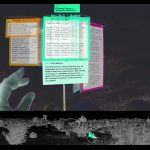
Wright explores the digital manifestation of an orihon manuscript style for how it can expand how we think of the novel's form. He considers how digital versions of J.M. Coetzee's Diary of a Bad Year and his own print novella make use of the concept of the fold as identified in the orihon style.
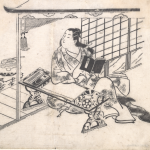
Stanfill and Salter reflect on conferencing amidst their organization of the 2020 ELO Conference in Orlando, Florida that had to change to due a global pandemic. Sharing their experiences and wisdom, they discuss the strengths and weaknesses of various virtual platforms for conferencing, coupled with the contexts of concurrent politics, co-location, and lessons for the future.
This except from Twining: Critical and Creative Approaches to Hypertext Narratives explores the popular and open-source digital storytelling platform Twine. Authors Anastasia Salter and Stuart Moulthrop discuss the history of Twine as well as existing works and possible projects.
Nick Montfort discusses two of his computer-generated texts that manifest as print-on-demand books, websites and gallery installations. Though distinct in form and content, Autopia and The Truelist were guided by the author's self-imposed constraints and programmed with minimal code to produce predetermined, "novel-size" outputs. Montfort intends these texts to engage the imaginations of readers with the combinatory aspects of language in culture as well as invite them to a deeper reading of the generating code.