2008
Jordan Mechner explains how the team developing of Prince of Persia: The Sands of Time incorporated a number of cinematic techniques such as flashback and voice over (which do not usually figure into video games) while also working within the practical restrictions of a commercial production schedule.

Michael Mateas and Andrew Stern argue that new media practitioners and scholars should be literate in the code that underlies their objects of creation and study. To this end, they explain how they structured the code of their computer-based interactive drama Façade, which capitalizes on the procedural nature of computers to create a forum for participatory drama that negotiates players' local and global agency within the game world.

Robert Zubek describes how his program takes advantage of the tropes of breakup conversations. These generic norms allow The Breakup Conversation to assess players' textual entries categorically rather than semantically and thereby convincingly simulates an IM-based interaction.

Chris Crawford walks through Deikto, an interactive storytelling language that "reduce[s] artistic fundamentals to even smaller fundamentals, those of the computer: addition, subtraction, multiplication, and division."

D. Fox Harrell considers what is computational about composition, and describes the GRIOT system for generating literary texts.
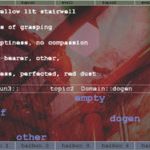
Lee Sheldon describes his playable adaptation of Agatha Christie's And Then There Were None, which relies on his invention of a "suspicion meter" to quantify and track the player's interaction with - and assessments of - NPCs (non-player characters).

The electronic release of Second Person starts with a number of essays on tabletop role-playing. Most of these consider the entanglement of play and narrative in a variety of game systems, from the highly controlled to the largely open-ended.
Kevin Wilson describes his methodology of boiling a franchise down to its core elements and weighing the differences among media when translating games from medium to medium.
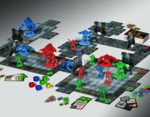
Bruno Faidutti begins with the controversial premise that "[e]very game tells a story," in his description of how he uses literary techniques to enhance gameplay - even in non-RPG systems such as board games, which don't traditionally include a story.
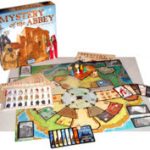
Eric Zimmerman describes his interactive paper book as "an inverted exquisite corpse," and although a digital version of the book would be easy to produce, he argues that an electronic edition would not produce as meaningful an experience as the printed volume.
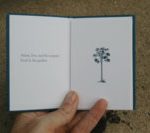
Kim Newman describes various methods of approaching his choose-your-own-adventure-style novel, which can be read or played because, like a role-playing game, "you are at once a reader and the main character."
Using Exalted as her text, Rebecca Borgstrom begins with the premises that every role-playing game requires a setting, and that to establish a fictional world players work within a mutually agreed upon structure to construct meaning.
James Wallis uses genre as the fulcrum for balancing game rules and narrative structure in story-telling games, which he differentiates from RPGs through their emphasis on the creation of narrative over character development.
Will Hindmarch contests Greg Costikyan's challenge to the idea that "games have something to do with stories" by contending that "storytelling games reconcile the theoretically antithetical relationship between their two halves - story and game."
2007
Greg Costikyan revisits the narrative versus game-play debate that continues to be a staple of both Game Studies and Game Design. He presents a spectrum that ranges from game-focused forms to narrative-centric models, and suggests that free-form role-playing may be the most desireable marriage of narrative and game-play.
Erik Mona takes a first step toward measuring the cultural impact of Gygax and Arneson's Dungeons & Dragons by providing a pocket history of the game's generation and evolution. Mona explains the addition of character development as a game goal - the innovation that distinguishes D&D from its predecessors, and started the role-playing revolution.
Kenneth Hite argues that the long-running, H.P. Lovecraft-inspired Call of Cthulhu franchise differs from traditional tabletop role-playing in its focus on suspense rather than character growth. Hite's analysis suggests that in its origins and emphasis on narrative structure Cthulhu is a highly literary game.
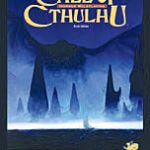
Van Leavenworth, in his response to Hite, delves more deeply into Cthulhu's literariness, in particular the "large adventure book 'footprint'" of the series. He contends that the Lovecraft mythos provides a framework for the generation of narratives that - unlike many RPG stories - hold up beyond the game-play session.
David Alger responds to Herber by disagreeing with the latter's claim that narrative trumps game-play in the Cthulhu "Haunted House" scenario, stressing that even the most narratively driven games still must be playable in order to be games.
Jonathan Tweet explains how, unlike highly narratively structured games such as The Call of Cthulhu, the free-form, character-focused Everway includes a matrix that allows for the creation of coherent characters and productively constrains the otherwise open-ended game-play.