The Poetics of Augmented Attention: Tina Escaja’s Realidad mitigada
Few contemporary writers in Spanish have explored the creative possibilities of digital media as persistently and imaginatively as Tina Escaja. A Spanish poet, scholar, and artist based in the United States, she currently serves as Deputy Director of the North American Academy of the Spanish Language (ANLE) and is a Corresponding Member of the Royal Spanish Academy (RAE). Through the digital persona, Alm@ Pérez, Escaja has explored forms as diverse as hypertext poetry, cyberfeminist interventions, barcode poems, robotic verse, collaborative digital projects, and augmented reality experiments. Long before electronic literature became a recognized field within Hispanic studies, she was already investigating how digital technologies might transform not only literary form but also our understanding of language, identity, embodiment, and community. Professionally situated between Spain and the United States, Escaja’s transatlantic trajectory has fostered a poetics attentive to movement, displacement, translation, and cultural exchange.
Realidad mitigada: una experiencia AR, published by Artepoética Press in 2025, gathers and rethinks many of these concerns. The volume functions simultaneously as a poetry collection, an archive of earlier digital works, and a renewed exploration of augmented reality as a poetic medium. Bringing together projects developed across different technological moments—from Flash-based experiments to QR-code interventions and robotic poems—the book offers the most comprehensive view to date of Escaja’s sustained engagement with digital poetics. Escaja revisits earlier digital projects while adapting them to contemporary technological conditions, confronting in the process one of the defining challenges of electronic literature: obsolescence. Platforms disappear; software ceases to function; interfaces become inaccessible, yet poetry survives by migrating across media, and several works included here have undergone precisely this process of mutation; their movement from one technological environment to another becomes part of their aesthetic and conceptual significance.
Although the volume explicitly identifies itself as “an AR experience,” Escaja does not choose the expected phrase, realidad aumentada (“augmented reality”), as its principal title; instead, she offers realidad mitigada (“mitigated reality”). The distinction is subtle but consequential. Whereas augmentation suggests expansion, accumulation, and the promise of “more,” mitigation implies moderation, relief, and care. According to the Diccionario de la lengua Española, mitigar means “to moderate, mitigate, lessen, or soften something harsh, severe, or rigorous.” Derived from the Latin mitigāre (“to soften”), the term retains a distinctly affective dimension in Spanish: one mitigates pain, grief, anguish, suffering, or loneliness. Escaja’s choice of title activates precisely this register. The technologies of augmented reality deployed throughout the volume are designed to expand perception, yet this expansion is consistently directed toward practices of care, relation, and collective engagement.
This semantic shift provides a key to the volume as a whole. The works gathered in Realidad mitigada repeatedly emerge from situations of collective vulnerability: war, technological surveillance, displacement, ecological anxiety, and the COVID-19 pandemic. Neither poetry nor technology is presented as a remedy to these conditions. Instead, Escaja explores how artistic and technological practices can create spaces in which experiences are shared, processed, and reimagined collectively. If reality cannot always, or immediately, be transformed, this book suggests that reality may nevertheless be mitigated through artistic interventions. The title, thus, names not only a media practice but also an ethics of attention, relation, and care.
The collection is organized into five sections, each approaching the relationship between technology and humanity from a distinct angle. The opening section, “Alquimias” (“Alchemies”), establishes many of the book’s central concerns. Drawing on chemical elements such as iron and morphine, these augmented poems explore processes of transformation that blur the boundaries between the organic and the technological.1 The alchemical metaphor proves particularly apt: matter becomes language, language becomes image, and image becomes movement. Human beings and technological systems emerge not as opposing forces but as participants in shared processes of creation and change. The second section, “Forja” (“Forge”), turns toward autobiography and memory. Returning to symbolic elements associated with iron, labor, and Zamora, Escaja’s native city, these poems explore the fluidity of identity across multiple geographical and linguistic spaces. Particularly engaging are the interactive “Emblemas” (“Emblems”), which transform place names such as Zamora, Barcelona, and the United States into linguistic fields of exploration. Readers encounter words generated from the letters composing these locations, creating unexpected connections between geography, memory, migration, and personal experience. Identity emerges less as a fixed essence than as an ongoing process of linguistic, geographic, and cultural recombination. Technology here mirrors memory itself—nonlinear, recursive, and associative—narrowing the gap between past and present, between place and remembrance. “Código de barras” (“Barcode”), the third section, foregrounds the most openly political dimension of Escaja’s practice. Originally conceived during the Iraq War, the project interrogates systems of surveillance, violence, imperial power, and technological control. The barcode functions simultaneously as visual form, technological device, and political metaphor. The original software supporting the project no longer functions as intended, and rather than treating this as a limitation, Escaja incorporates the necessity of reinvention into the work itself. Like living organisms, these poetic works persist through adaptation, thereby attesting not only to poetry’s resilience but also to its capacity to address new contexts and audiences.
The title of the fourth section, “Robopoem@s” (“Robopoems”), invites multiple readings from the outset. On one level, it refers to poems generated through robotic entities; on another, the Spanish prefix robo- recalls robo (“theft”), potentially opening a metafictional reflection on originality and authorship. The latter association is particularly suggestive in a book that repeatedly revisits and reactivates earlier projects. Rather than conceiving originality as the production of something entirely new, the Robopoem@s foreground creativity as a process of mutation, recombination, and remediation—offering in this respect a key to Realidad mitigada itself, a volume that gathers decades of hybrid artistic production and reworks it through new technological forms.
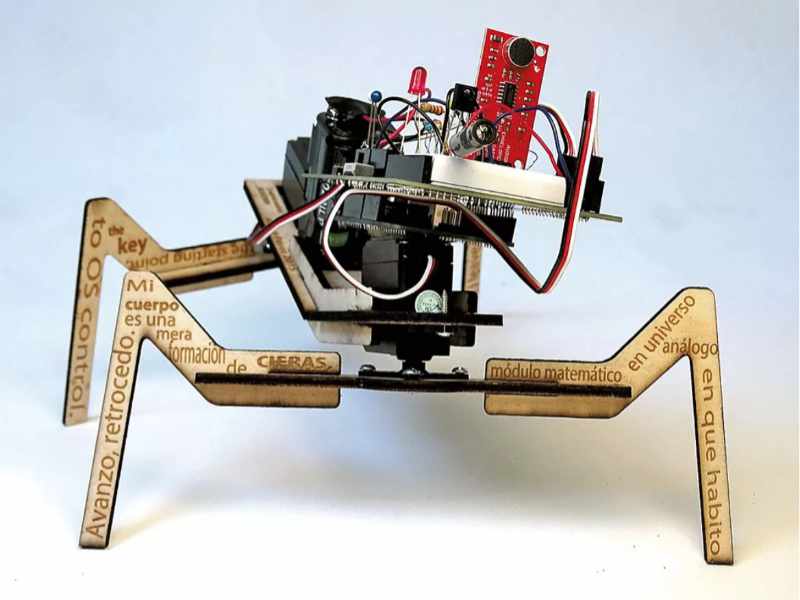 Figure 1: Robopoem@. Reproduced by permission of Tina Escaja.
The robots whose voices are implied in the Robopoem@s are equipped with sensors and microphones. They emit poems as they encounter obstacles in their environment, transforming technological experimentation into a meditation on the conditions of artistic creation. What distinguishes creator from creature? What forms of intelligence participate in artistic production? What remains irreducibly human in an age increasingly populated by autonomous systems? The poems consistently deconstruct any straightforward distinction between human and machine. In “Robopoem@ II,” the poetic voice explains: “Mi cuerpo es una mera / formación de cifras … / en el universo análogo en que habito. / Nos duplicas” (“My body is a mere / formation of figures … / in the analogue universe that I inhabit. / You duplicate us” [51]). The concluding line disrupts the presumed hierarchy between creator and creation, suggesting a relationship of reciprocity rather than one of mastery and dependence. An analogous dynamic structures “Robopoem@ V,” where the robotic speaker presents itself as “tu juguete-circuito, / el teclado de tu capricho y miedo / a tu propia torpeza, / vulnerable e impreciso en tu frágil universo / que encapsulo” (“your circuit-toy, / the keyboard of your whim and fear / of your own clumsiness, / vulnerable and imprecise in your fragile universe / which I encapsulate” [55]). Here the machine initially appears as an extension of human desire, anxiety, and vulnerability, yet the poem ultimately reverses the expected relationship between creator and creation. Rather than being contained within the human world, the robotic voice claims to encapsulate that world, unsettling distinctions between subject and object, container and contained, human agency and technological agency.
The poems’ recurring use of apostrophe reinforces this destabilization. The robotic voice addresses a you that exceeds any single referent. On one level, the pronoun may designate the creator who brought the machine into being; on another, it extends toward the reader, who becomes implicated in the poetic exchange. In “Robopoem@ V,” the implied apostrophic address—“tu juguete-circuito” (“your circuit-toy”), “el teclado de tu capricho y miedo” (“the keyboard of your whim and fear”)—evokes a direct encounter between human and machine. The poems do not, however, merely represent such a relationship; through the performative deployment of poetic language, they generate the illusion of a present relationship unfolding in the act of reading. By drawing the reader into the circuit of address, they interrogate the distinction between observer and participant, reader and poet. Situated within contemporary debates surrounding artificial intelligence, the Robopoem@s are neither presented as replacements for human creativity nor reduced to passive instruments at its service. Rather, they emerge as interlocutors that expose the ambiguous boundaries separating human and technological forms of expression. If much contemporary discourse frames the relationship between humans and machines in terms of rivalry, the Robopoem@s instead imagine a dialogic relationship rooted in coexistence, reciprocity, and symbiotic dependence.
The final section, “Mar y virus” (“Sea and Virus”), further articulates the book’s ethical concerns. Developed during and after the COVID-19 pandemic, these poems explore what forms of relation remain possible under conditions of separation, uncertainty, and restricted movement. The sea constitutes a recurrent symbolic trope in modern Spanish poetry. In works such as Rafael Alberti’s Marinero en tierra, it is associated with movement, longing, distance, and horizons that exceed the immediate present. Escaja inherits this maritime imaginary while reconfiguring it through the experience of the pandemic. In the poem titled “El mar, huésped y encierro” (“The Sea, Guest, and Confinement”), the sea is framed against the backdrop of “Una humanidad quebrada y dispersa / en perpetua mutación y encierro” (“A broken and scattered humanity / in perpetual mutation and confinement” [67]). The sea’s traditional associations with mobility and openness are brought into tension with quarantine, isolation, and restricted movement. An analogous tension emerges in “Calles cerradas” (“Closed Streets”), where the poetic voice affirms: “Muere mueren y morimos solos … / El virus queda” (“He dies, they die, and we die alone … / The virus remains” [69]). The movement from third-person singular to plural and finally to the first-person plural transforms individual loss into a shared condition, displacing the isolated subject in favor of a collective “we.”
The collaborative architecture of Escaja’s well-known Captchapoemas extends this shift from the level of poetic enunciation to that of poetic practice. Developed during the pandemic and later incorporated into the book, the project shifts attention from the solitary poet to a distributed network of participants. Through QR codes disseminated across multiple cities and countries, contributors share stories, images, and reflections, creating a transnational archive of pandemic experience. Escaja thus becomes less the sole producer of poetic meaning than the catalyst for a collective process of exchange. Poetry emerges not as a closed aesthetic object but as a communicative practice sustained through creative contagion, response, and circulation.
The inclusion of the Captchapoemas in Realidad mitigada gives renewed material form to a project that originally unfolded through digital networks. Rather than merely documenting an earlier initiative, the book reactivates and extends it. The printed volume becomes part of a larger ecology of connections linking readers, technologies, texts, and places across time and space. This process is reinforced through the QR-code stickers included at the end of the book, designed to be removed and redistributed by readers. Poetic creation exceeds the boundaries of the codex and continues its viral circulation in public space. The work leaves the page and re-enters the world, remaining open to reuse, repetition, and mutation. Realidad mitigada thus appears as a living network of texts, readers, and technologies whose meaning continues to unfold beyond the book itself.
Rather than replacing reality, Escaja’s artistic work seeks to supplement it. Rather than producing alternative worlds, it invites renewed attention to the one we already inhabit. If virtual reality aims to replace direct physical experience with simulated environments, augmented reality operates by adding digital layers to the material world. Escaja pushes this logic one step further. Throughout Realidad mitigada, technology functions less as a means of escape than as a means of disclosing latent possibilities within the world around us. Language, memory, images, archives, algorithms, and technological infrastructures all shape how reality becomes legible. Her work proceeds from the premise that reality is never immediate—it arrives already filtered through multiple systems of representation. Augmented reality does not create mediation; it draws attention to mediations that ordinarily remain invisible.
This emphasis on mediation is inseparable from the book’s investment in materiality. At first glance, a collection devoted to augmented reality might appear to privilege screens over pages or digital interfaces over physical objects. Yet Realidad mitigada, as a printed book, remains indispensable. Readers must hold it, turn its pages, scan images, interact with QR codes, and navigate the shifting boundary between paper and screen. An accompanying application activates the augmented elements and extends the poems into visual representations. Turning the pages, reading the words, and then physically using a smartphone to activate new layers creates a slower rhythm of reading. The process asks readers to pause, to look again, and to attend more carefully to their surroundings. Far from dematerializing reading, the volume foregrounds its embodied and durational dimensions. The augmented layer becomes an invitation to dwell longer with the poem and with the material world from which it emerges. One might describe this as a form of augmented attention: a mode of reading that deploys technological mediation not to divert perception but to sharpen it.
Escaja’s oeuvre is of interest to a wide range of disciplines*.* Scholars working in Hispanic literary studies, digital humanities, media theory, and the poetics of testimony and collective experience will find in this book a theoretically alert and formally inventive object of study—one that engages, implicitly or explicitly, with debates around remediation, obsolescence, participatory poetics, and the political valences of technological form. Beyond these specialized readerships, the volume speaks to anyone working through the cultural consequences of the current technological turn, precisely because Escaja grounds her inquiry not in abstraction but in specific formal choices, specific historical crises, and specific acts of perception. For longtime readers of Escaja, Realidad mitigada brings together and extends many of the questions that have shaped her poetic and artistic practice. It brings together projects developed across technological environments that are increasingly vulnerable to obsolescence, and it makes legible, for the first time in a single sustained object, the coherence and scope of a poetic practice spanning several decades.
What distinguishes Realidad mitigada from many contemporary technological imaginaries is its sustained resistance to the technological determinism that has shaped so much recent discourse about digital culture. Over the years, Escaja has consistently examined the ways technological media can function as extensions of memory, imagination, solidarity, and care rather than as forces that diminish human agency. The material book stands as both a record of that inquiry and a continuation of it. Throughout the volume, technology operates less as an end in itself than as a relational medium through which distances—between human and machine, past and present, individual and collective experience—are constantly reconfigured rather than dissolved. Escaja’s augmented poems do not isolate readers within individualized technological environments. Instead, they produce encounters between page and screen, word and image, voice and code, memory and community. Readers are reminded that language, images, memories, technologies, and social relations shape how the world is understood and experienced. Escaja’s augmented poetics draws renewed attention to these mediations, encouraging a more reflective engagement with them. The book prompts readers to engage more rigorously with the ecologies of connection, exchange, and care that structure social life, including under conditions of crisis. Ultimately, the object of augmentation in Realidad mitigada is not reality itself but our capacity to attend to it.
Footnotes
-
All translations from the Spanish are my own unless otherwisenoted. ↩
Cite this essay
López-Gay, Patricia. "The Poetics of Augmented Attention: Tina Escaja’s Realidad mitigada" electronic book review, 30 September 2026, https://electronicbookreview.com/publications/the-poetics-of-augmented-attention-tina-escajas-realidad-mitigada/