2013
This introduction is not a "digital" essay, but what follows it - a version of a moving essay-poem originally presented in real time at the 2012 elo conference - is. Florence's presentation explores how the "espacement" (Mallarme, Derrida) intrinsic to all writing changes in a born-digital context. The work reminds us of something we anticipated early in the formation of ebr - that 'critifiction' is and always has been the way to make essays in the digital era.
"At the Time of Writing" considers the role of proprioception and the embodied memory of writing and gesture as a critical component of readerly practices. Anna Gibbs and Maria Angel examine a series of works of born digital literature that use representational techniques to evoke an "ethos of touch" that is critical to the experience of the work. Gibbs and Angel conclude that feeling is key to the process of meaning-making, and that experimental interfaces foreground the importance of the body in literature.
Ralph Clare sees the new essay collection on William Gaddis as engaging a growing reassessment of the novelist's work. Taking up the task of moving the scholarship past the postmodern theories that framed and determined it for some time, Clare argues that 'The Last of Something' turns out to be the beginning of something more. Approaches in the collection range from new forms of biographical and contextual criticism, to theories of data storage and "bare life," but the nuance and ambition of the scholarship re-asserts the relevance of Gaddis.
Time to get anarchic! Ralph Clare's review of A Corrupted Pilgrim's Guide, the first scholarly take on Thomas Pynchon's 2006 Against the Day, zooms in and illuminates the novel's anarchist framework as the major claim and long-term contribution of the collection. The aesthetics and ethics of anarchism turn out to be not merely a theme in the novel's setting - the late ninetieth to early twentieth-century - but the way it impinges on our current situation.
Andrew Klobucar argues that a new iPad app for The Waste Land demonstrates, despite the developer's intentions and Eliot's fears, that the symbolic form of the database is irrepressible. According to Klobucar, Eliot bemoans the cultural impact of new media and technological innovation, though his poem--particularly through Pound's editorial notes and Eliot's added annotations--employs the structure of a database. The app for The Waste Land attempts to mitigate this tension by promoting a sing...
Reviewer Tim Keane suggests that Pete Townshend’s memoir Who I Am captures the tension animating The Who’s career, the duality of autobiographical blues and (art-school inspired) auto-destruction. But, Keane suggests, the book also articulates the written autobiography’s inevitable (if sometimes interesting) failure to achieve the “ex-static” atemporality of music. “I Can’t Explain" ends up telling us more about Townshend’s soul than Who I Am.
Taking recent writings-of-internet as test cases, Stuart Moulthrop demonstrates the folly of deploying modernist compositional models, even avant-garde theories of citational and conceptual poetry recently popularized by Kenneth Goldsmith and the Flarf poets, to read born-digital writing. Though it may be fun, it's ultimately futile to interpret the contingent output of an "interface in process" as a poem existing in a fixed, terminable state. Perhaps, then, interfacing with databases is becoming integral to not just electronic literature and digital poetics but all forms of literary study and practice?

Adam Pilkey argues that the ARG Year Zero's use of "revealing noise" allows and encourages the audience to help in the building of the narrative by becoming participants in a conspiracy theory within the ARG. Pilkey argues that "The Presence" found in the Nine Inch Nails album and corresponding ARG, Year Zero, symbolizes and denies a truth, which in turn provides a means that furthers the resources that constructs conspiracy theories in this alternate reality.
2012
Just as Walter Benjamin declared that all "great works of literature either dissolve a genre or invent one," Brian Kim Stefans argues that all successful works of electronic literature are sui generis and invent their own genre. There can be a vocabulary for this invention, however, and Stefans sets out “The Holy Grails of Electronic Literature,” “Six Varieties of Crisis,” and the “Surrealist Fortune Cookie.” Through these concepts, he describes the formal challenges, reading experiences, and fundamental textual units of electronic literature.
Steve Tomasula in Conversation with Jhave. Recorded at the Banff Centre, Alberta, Canada. 2012-02-21.
Hans Kristian Rustad sympathizes with Curtis White's "latest word." White diagnoses a crisis in contemporary literature in the "Amazonian" monolith dominating the online book industry. Still, Rustad questions White's lack of attention to electronic literature. For Rustad, elit may "save literature from market-oriented book houses that evaluate books by potential profits."
Yra van Dijk calls for a return to the text, for a criticism of digital literature that moves past foundational work on the new form and seriously engages with the work itself. In Roberto Simanowski's Digital Art and Meaning and in the edited collection Reading Moving Letters, van Dijk finds a return engagement with deep meaning and with criticism as a site of intentional human experience, and not of heavy theory or machinic spectacle.
Rui Torres tracks the practice of intertextual borrowing or "plagiotropia" between the works of Portuguese experimental poets. Plagiotropia is a tangible and fecund practice in digital poetry, where poetic texts migrate and grow across media. Torres' arguments culminate in an examination of his own online combinatory cyber-poetry, which creatively re-writes earlier pre-digital experimental works.
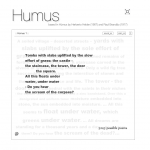
Lila Marz Harper shows the many dimensions of intertextuality between Edwin Abbott's Flatland and Steve Tomasula's VAS. From typography to narratology, Tomasula's "opera in flatland" follows Abbott, in a geometry of fiction that interrogates the biopolitics of today.
Is literature a medium for handling our fears? Anne-Laure Tissut argues that the polysemous multimedial procedures of Steve Tomasula's VAS collapse body and text in a way that both amplifies and cushions fears of mortality, instability, and otherness.
House of Leaves may be on everyone's shortlist of postmodern media-savvy novels, but are we ready for a retrospective collection of essays on Mark Z. Danielewski? According to Daniel Punday's review, Joe Bray and Alison Gibbons' collection says as much about the current state of (post) postmodernist writing as it does about Danielewski's scant oeuvre.
Like a text whose every rewriting is a reinterpretation, the body changes each time its "naturalness" is re-articulated anew. This is the spiraling history traced by Steve Tomasula’s VAS, which depicts the body, according to Alex Link, as "the place where cultural work is naturalized, and where the natural is worked."
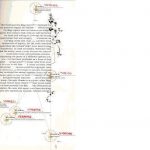
Katherine Hayles uses Steve Tomasula's multimodal TOC for a significant engagement with the temporal processuality of complex technical beings. Drawing on Bergon's "duration" and its elaboration in recent theories of technicity and consciousness, Hayles explores the complex temporal enfoldings of living and technical beings, showing that Tomasula's new media novel narrates and materially embodies such assemblages.
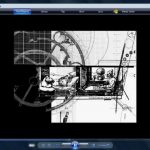
Steve Tomasula's TOC is hard to explain, according to Alison Gibbons. You're better off experiencing it in all its multimodal and multimedial complexity. Using human computer interaction and narrative theory, Gibbons shows that the emergent, singular, fractured temporality of reading TOC raises the bar for the new media book.
Stephen Ramsay introduces a short film in which he does a live reading of composer Andrew Sorensen's performance "Strange Places" and provides commentary.