Fluid Texts: Implicit Collaboration in Electronic Narratives (skains)
This essay discusses collaboration and appropriation for electronic works, using two of her own texts to help readers understand the thoughts and processes behind these creations. While explaining that implicit collaboration is still a very controversial issue, Skains' essay persuades the reader that the benefits and possibilities of collaboration far outweigh the negatives.
This essay discusses collaboration and appropriation for electronic works, using two of her own texts to help readers understand the thoughts and processes behind these creations. While explaining that implicit collaboration is still a very controversial issue, Skains’ essay persuades the reader that the benefits and possibilities of collaboration far outweigh the negatives.
Introduction
Appropriation is a readily acknowledged practice in the arts, particularly the visual arts, where it contributes to continued discourse and response; as Voyce notes, “[t]he history of the 20th- and 21st-century avant-garde is a history of plundering, transforming, excavating, cataloguing, splicing, and sharing the creative output of others” (408). In literature, appropriation is frequently a gray area between inspiration and plagiarism; electronic literature, however, with its frequent merging of the visual and literary arts (among others), lends itself more readily toward collaboration and appropriation. As I have found in my own work, and this paper will show, appropriation alters both the writer’s process and the final narrative, resulting in an implicit collaboration between writer/artist and those whose work is appropriated.
I use the term “implicit collaboration” here, as opposed to the more familiar appropriation, for several reasons. Appropriation is a recognized practice in most media, perhaps most used in visual arts, but certainly utilized in film and literature (Barefoot; Goldsmith). Barefoot refers to Joseph Cornell’s appropriation of found footage as “recycling,” which at the very least puts a positive spin on the process, that of making use of materials which would otherwise be thrown away. Ken Goldsmith echoes Foucault, Barthes, Genette, and Benjamin in asking “…isn’t all cultural material shared, with new works built upon preexisting ones, whether acknowledged or not?…What is the difference between appropriation and collage?” (110), while espousing the benefits of “uncreative writing” in terms of artistic inspiration and discourse.
The term appropriation, however, along with other terms such as assemblage, remix, sample, and collage, fails to connote the authorship of the “sampled” artists whose work is incorporated. Other, more negative terms, such as plagiarism or Jenkins’ “textual poachers,” have clear connotations of unethical, even illegal, actions. Artists refer to their intertextual processes using various more innocuous terms: Mark Americka’s “surf-sample-manipulate,” for example, is grounded in the actual activity of seeking material, appropriating elements of found art, and re-purposing it to create new art (n.p.). Ken Goldsmith’s 2011 description of what he terms “uncreative writing” is almost self-effacing, and in fact ironic given that he describes his process of using only found material in his writing as having “as many decisions, moral quandaries, linguistic preferences, and philosophical dilemmas as there are in an original or collaged work” (119). Spinuzzi’s “compound mediation” is nearly mechanical, describing a process of “bring[ing] together texts from multiple sources…in order to create new texts, a process often involving breakdown, reallocation of resources, creation of new hybrid genres, and shifts in power” (Johnson-Eilola and Selber 382) which removes the authors of these texts almost entirely.
My purpose in choosing the term “implicit collaboration” is to acknowledge both this active process of appropriation and also the inspirational effects of collaborating with other artists, both within and without the genre in which I am actively working. The appropriated works (I should say “consciously appropriated,” to differentiate them from Genette’s cultural and literary palimpsests) are works that have been placed in the commons for the express purposes of such appropriation. The use of Creative Commons or similar licensing denotes an attitude of sharing and co-creation, which “serves to broaden the consumption of [creative] commodities through space and time, cementing their position in popular culture” (Currah 468). As the majority of works with such licenses carry an “attribution” caveat (works can be used and re-distributed only if proper attribution is given), it is clear that the creators want their contributions to be acknowledged, their authorship explicitly recognized. This “giving away” of resources (though in a digital environment, resources are duplicated, never lost) in a digital gift economy results in increased capital in the form of status (Currah; cf. Sinnreich et al.).
Of course, these collaborations are not as explicit as a demarcation of co-authorship would denote. As I explore in this paper, the creation of these “compound mediations” involves surfing for materials, sampling elements that inform or inspire my work, and manipulating them for incorporation into a new piece. It could be argued that this is no more a collaborative process than that of workers on an assembly line: workers farther down the line may have to adjust their activities according to deviations committed by previous workers, but overall the process is not an equally partnered activity. As I will show, however, found art and subsequent appropriation of that art in a new work have the potential for profound influence. The inclusion of found art and that inclusion’s effect upon the creative process combine in a collaboration between artists, made implicit because the original artists have no explicit authorship role in the creation of the new piece.
This paper will examine two of my creative texts, AwaketheMighty**Dread (interactive fiction, forthcoming) and StreamsSlippingintheDark (hyperfiction, forthcoming), presenting an insight into their composition through the use of implicit collaboration with other artists, as well as analysis of the narrative effects of these “found” resources on the final artifacts.
Process and Narrative Effects
Awake the Mighty Dread and Streams Slipping in the Dark are pieces written as part of a larger work; the project as a whole is an examination of multimodal creativity. In order to map out the chaos that is so often a writer’s process, I begin with Flower & Hayes’ 1981 composition model (shown in fig. 1). This hierarchical model acknowledges the fluid (and yes, chaotic) mental processes of writing, as it accounts for the author/creator’s shifts in, out, and through planning, writing, and rewriting phases at any given point in the process.
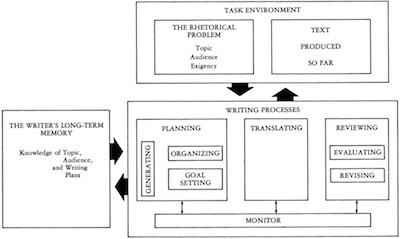
Figure 1. Flower & Hayes’ Cognitive Process Model (A Cognitive Process Theory 370)
The model is not a perfect one, as it is so self-contained to the particular text currently underway, and does not account for external influences such as interruptions, long-term breaks in the creation process, or simultaneous work on other texts. It is also notable that this cognitive process model does not in the first instance incorporate multimodal forms of creation, focusing exclusively on written composition. It may seem inappropriate to apply this model to the synaesthetic process of creating digital fiction in what Andy Campbell calls a “liquid canvas” (n.p.), but incorporating Flower & Hayes’ 1984 Multiple Representation Thesis offers a more fluid aspect. This thesis poses that “[w]riters at work represent their current meaning to themselves in a variety of symbolic ways,” which includes multiple modes such as imagery, prose, sound, and movement, as well as rhetorical devices such as metaphor, schemas, and abstractions (Images, Plans, and Prose 129). Expanding the model to include not just written prose but all modes within the current text permits examination of a multimodal creative process.
For the purposes of this paper, I am primarily interested in the white-space between planning and translating. This gap is where implicit collaboration has a role, as it is where “surfing” for materials enters the process. During the planning process, I envision the text; this generally involves drafting print-only versions of the text, storyboarding, and concept mapping, though not necessarily all of these stages occur for every project. For multimodal projects, another box should be added in this white space: seeking resources (Amerika’s “sampling”). As the following sections on use of images and use of source code explore, explicitly exposing myself to and actively seeking others’ art to appropriate during this point in the process has a direct effect on the translation of the project at hand.
Use of Found Images in Hyperfiction
Streams Slipping in the Dark (forthcoming) is a hyperfiction created through the use of html and Javascript. The story follows several characters as they make their separate ways through a fairyland in search of one another, converging upon a castle and its resident queen. The piece was first drafted in print form, with the digital hyperfiction in planning stages as the print text was composed. Planning for the hyperfiction consisted primarily of hand-drawn storyboards and concept mapping of the navigation. Once the storyboards and navigational maps were complete, I began the search through Creative Commons sources (flickr.com, deviantart.com, Google Image search) to find images and audio files to sample, manipulate, and appropriate.
The working plan at this stage was to build the hyperfiction around the visual concept of a Tolkienesque fantasy map of the island queendom the characters were exploring (see http://amegusa.deviantart.com/art/Bilbo-s-Map-of-Eriador-80863819 for an example). I made extensive use of stock materials on deviantart.com for parchment-like background textures and Photoshop brush sets of map icons (mountains, villages, trees, etc.). I intended to assemble these pieces together into a final image of my own creation for a clickable, interactive map that would deliver bits of the story in chunked lexias as the reader explored, following the actions of the characters within the story.
I am not a visual artist by the stretch of anyone’s imagination; even armed with the ingredients for a fantasy-style map, I still needed some visual samples of finished maps to guide me. In my quest for more experienced artists’ creations on deviantart.com, I discovered deviantart.com user “anna-terrible”’s 2011 ink-and-watercolor “childhood dreamspace map” (see http://anna-terrible.deviantart.com/art/childhood-dreamspace-map-207434534). The image itself is not shared in the commonsdeviantart.com (at this time) does not offer a search filter for work with Creative Commons licensing, and thus searches result in a mix of works that are and are not available for appropriation. At times, this can be frustrating, as I generally find that the highest quality work - i.e., that which I’d be most inclined to use - carries full copyright protections. Often these form part of professional artists’ sample portfolios. On the other hand, the inability to filter this protected, professional-level work out can, as in this case, lead to inspiration rather than full appropriation., but its whimsy, color, and depth were eye-catching and intriguing, lending the image toward narrative rather than mere illustration; the colors and textures overcame the barrier of the screen to create “a stage on which fairy tales spring to life” (Benjamin 435). The artists’ description furthers this perception: “for class i had to draw a map of any events that happened during my childhood. this is where i remember dreaming as a kid” (anna-terrible n.p.). The inspiration for “childhood dreamspace map” seated itself well in the narrative of Streams Slipping in the Dark, which centers on a young girl who is, in essence, dreaming the entire landscape(s) in which the story takes place.
Finding this image first resulted in exaltation, as it seemed to be an image I would have created for this piece had I any ability in the visual arts, followed swiftly by extreme disappointment that it was not licensed for commons use. I repeatedly returned to the image, however; it did not fit into the story perfectly, of course. Streams was centered on a castle, and contained neither a haunted house nor a marketplace, which are the defining features of “childhood dreamspace map.” Eventually, I settled upon a plan: to attempt as best as my limited skills at desktop illustration would permit to emulate the outline, depth, and feel of anna-terrible’s dreamspace, while manipulating the image to fit more seamlessly into the narrative I had created. The result clearly shows the origins of the image as belonging to anna-terrible, but sufficient changes wrought to bind it within the storyworld of Streams Slipping in the Dark (see fig. 2).
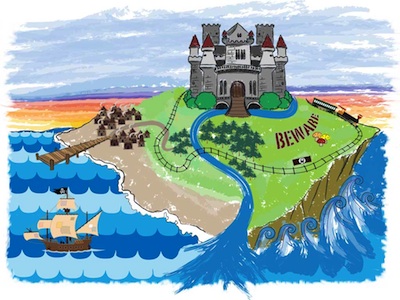
Figure 2. Interactive Image from Streams Slipping in the Dark
In the end, the translation of this hyperfiction was a much more ground-up creative activity than for which I had planned. After all, my initial work was largely a process of assemblage: using other artists’ Photoshop Brushpacks and textures to piece together a useable fantasy map. Inspired by anna-terrible’s dreamscape, however, I embarked upon a piecemeal illustration journey that resulted in appropriation (the basic outline of the island, the pirate ship, the train, and the basic outline of the castle all came from other artists), assemblage (putting all the pieces together and manipulating them to work together in the same image), and original creation (the village, the forest, the water, and the coloration).
anna-terrible’s dreamscape also affected the narrative and the readers’ experience. Had my original plan stuck, the resulting image would have carried connotations of Tolkien-variety fantasy, familiar and even clichéd. It would have incorporated iconic imagery (representations of mountain ranges, forests, cities, etc.) in a largely muted color palette (that of parchment-and-ink), with a two-dimensional aspect. The final image that I created (fig. 2) instead carries a more whimsical, child-like tone, calling to mind pop-up storybooks in its depth and color, immersing the reader in the fairy tale world through Benjamin’s “primal phenomenon” of color (442). It carries forth the fairy tale aspect of the narrative through to the imagery, and illustrates (though not explicitly) the truth underlying the narrative itself: that the world is created in the dreaming mind of a child. The effects of illustration and depth, instead of flat, representative map-space, invite the reader to explore the map. They offer a space in which the reader can travel him/herself, rather than merely following a dotted line of the characters’ travels. The further the reader moves into the image, the more narrative they discover, moving with the characters rather than observing from a distance.
The implicit collaboration with anna-terrible in this piece resulted in better integration of the modes used within the text than my original model and storyboards had outlined. In the next section, I will explore a more insidious form of implicit collaboration: code-borrowing.
Use of Open-source Code in Interactive Fiction
The philosophy of open-source code sharing that I will use in this paper is largely attributed (Lessig; Voyce) to Richard Stallman’s contributions to the GNU project and his group’s “free software definition” (gnu.org), though they are careful to differentiate between “free” and “open source.” The driving motivation between an open or free sharing of software code for noncommercial purposes is to encourage innovation and collaboration (Voyce). The benefit to artists participating in this open network of dissemination is a “proliferation of potential texts amid continuously changing assemblages of authorial, intertextual, and communal networks” (Voyce 409).
Many digital writers and poets are not code writers when they begin working in digital media. While I had done some rudimentary HTML coding in the ’90s, and had picked up a little basic programming here and there in school, I was not proficient in any programming language when I began creating digital fiction. At this stage, I conduct most of my programming work through the “cut-n-paste” method: determining what function I need, searching for the code online, cutting and pasting it into my own work, and adjusting from there. I am not alone in this practice, as evidenced by the hundreds of Javascript “cut-n-paste” code repositories online.
The first code-based writing that I attempted was prompted by a university module I audited in writing games, using the Inform7 platform for interactive fiction (IF). Inform7’s source code is a friendly language to learn for newcomers, as it is actually structured to mimic the English language as much as possible. For instance, the line “A chest is an unopened, openable container in the dungeon.” defines an object (the chest), its properties (it is a container that is currently closed, but capable of being opened), and its particular location (the room labeled “dungeon”). In addition to the (initially) straightforward structure of the source code, Inform7 has a small but enthusiastic community online, and many who work with the program write and share extensions to the program as well as the source code for their own IFs.
In crafting my first IF, I made use of many of these extensions; I also relied heavily upon Aaron Reed’s 2010 Creating Interactive Fiction with Inform7. Reed frequently uses examples from his 2010 IF Sand-dancer, and offers links to downloadable source files from that work. Rather fortuitously for my own work, Reed’s Sand-dancer incorporated a trickster figure, as mine did, and revolved around similar recurring themes of dream and memory. It seemed a custom-made guide for crafting my tale of wandering, wondering, trickery, and dreamworld.
The most prominent of the borrowed elements from Reed’s IF were those defining memories and actions concerning memories. In Sand-dancer, memories are things in a container labeled “subconscious.” They are triggered by the player-character handling particular objects within the world of the story, labeled “charged objects.” The first few lines of Reed’s code defining memories are as follows:
A memory is a kind of thing. A memory can be retrieved or buried. A memory is usually buried.
Suggestion relates various things to one memory (called the suggested memory).
The verb to suggest (he suggests, they suggest, he suggested, it is suggested, he is suggesting) implies the suggestion relation.
Understand “memory/memories” as a memory.
Does the player mean doing something to a memory: it is unlikely.
The subconscious is a container. When play begins: now every memory is in the subconscious.
Definition: a thing is charged if it suggests a memory which is in the subconscious.
In my IF, Awake the Mighty Dread, I used this example to generate a set of dreams that the player-character falls into when they touch charged objects or enter the command “sleep” (differences from Reed’s code are colored red):
A dream is a kind of thing. A dream can be dreamed, or undreamed. A dream is usually undreamed.
Trigger relates various things to one dream (called the triggered dream).
The verb to trigger (he triggers, they trigger, he triggered, it is triggered, he is triggering) implies the trigger relation.
Understand “dream/dreams” as a dream.
Instead of examining a dream when player is awake: say “Dreams only become real when you’re asleep.”
Does the player mean doing something to a dream: it is unlikely.
The subconscious is a container. When play begins: now every dream is in the subconscious.
Definition: a thing is charged if it triggers a dream which is in the subconscious.
Clearly, the code is copied and pasted from Reed’s source code, with some (but not all!) labels changed to suit the new story: “memories” become “dreams”; “suggest” becomes “trigger.” The code shifts significantly after this sequence, as the action of dreaming required further parameters related to sleeping and waking that were not required for Sand-dancer’s use of memories.
Use of Reed’s code did not introduce dreams to the overall narrative, as dream sequences are clearly present in drafts of Awake’s analogue version, though they are triggered not by charged objects or conscious efforts to sleep but by extreme emotional stress. The effect of the code-borrowing in the IF is significant, however, as it did result in a shift in the action of the IF narrative through the addition of charged objects. The player-character must make their way through a large palace full of objects – some charged, some not – in order to reach the conclusion. Falling into dreams offers crucial insight into the story, why it is happening, what the player-character (PC) has to overcome; falling into dreams and not being able to escape them leads to a bad end for the PC (death or inability to continue with the story). These charged objects triggering these dreams over and over are not present in early drafts of the story, as the analogue story follows the path I as the author dictated. Their appropriation from Reed’s IF allows for Awake’s expansion into Montfort’s “potential narratives,” brought about by the exploration of space and objects that is intrinsic to interactive fiction (14).
It is also important to note that I completed one analogue draft of the story before beginning to write the IF source code; Reed’s code served to add functionality and depth to an already-developed narrative and storyworld. Had I begun with his code as inspiration for a new IF of my own, perhaps the work that resulted would have been more derivative than collaborative. As I was working from an established narrative, however, Reed’s appropriated source code expanded my work in ways that, given my novice capability with the code, I could not have anticipated or built without its incorporation. While quite often the cut-n-paste technique leads to changes in the narrative because of limitations (e.g., code has not been previously written/made available for the desired functionality), here it enhanced and pushed Awake into narrative possibilities made available only through the implicit collaboration of the more experienced code writer.
Implicit Collaboration: Implications
Implicit collaboration occurs in overlapping spaces of Internet gift economies: exhibition space and collaborative space. Currah identifies the first as a space for user-generated content on display (YouTube, Flickr) and the second as group production projects such as Wikipedia and SourceForge (478). By sampling works offered in exhibition spaces, recombining them, and offering them up to further derivatives, a creative, collaborative gift economy is created. With it, questions and concerns arise with regard to attribution, copyright, monetarization, and the increasingly nebulous notion of authorship.
The ethics of appropriating other artists’ work is, and likely always will be, contested (Goldsmith; Sinnreich et al.). Copyright laws were introduced in part to reduce exploitation from appropriation and to provide a stable balance between excessive control of content that under-utilizes creative works and free sharing that results in under-production (Currah 468). These laws have endured numerous revisions since their inception in attempts to maintain this balance, and digital technologies have set the balance swinging yet again, as evidenced in the “push-pull” of anti-theft software designed to protect content and that software explicitly designed to remove such protections (Cover 153).
The currently prominent solution, for some, is to offer creative work in the commons under licenses offered by Creative Commons (creativecommons.org). While these works are of great benefit to artists and writers like me, Currah notes that creation of this open, gift economy can result in several downsides: copyright theft, floods of poor-quality works, malicious attacks, and assymetric participation in the ability to do more taking than giving. Creative Commons licenses offer mitigation for some of these, as creators can place caveats on the use of their work to account for them, such as attribution to ensure credit and “share-alike” to ensure new works are fed back into the commons. This system rides the fence between a completely free and open gift economy and one in which authorship (and its implications of ownership and commodification) is explicitly codified.
The need for such a system arises from a creative culture dependent on implicit collaboration, “texts generating other texts in an endless process of recycling, transformation, and transmutation with no clear point of origin” (Stam in Barefoot 166). A text with no clear point of origin ostensibly has no clear point of authorship. If this is true for adaptations and transtexts, it is certainly true for digital texts, which, Cover notes, “[blur] the line between author and audience, and erod[e] older technological, policy and conventional models for the ‘control’ of the text, its narrative sequencing and its distribution” (Cover 140).
Losing the distinction between author and reader can be viewed quite negatively. German author Helene Hegemann’s 2012 novel Axolotl**Roadkill garnered her widespread criticism for what some called plagiarism and she called remixing (Connolly n.p.). Kenneth Goldsmith recalls that some poets’ reactions to their work being appropriated to the Issue**1 poetry anthology as copyright theft, misattribution, and even vandalism (121-2). Sinnreich et al.’s 2009 survey showed that audience attitudes toward appropriation depended upon the perception of commercialism and originality in the piece: if work was appropriated for profit, or if the appropriated work was seen as copying rather than contributing something original, it was more likely to be seen as unethical.
Many, however, view creative works - even their own - as part of the cultural commons. Goldsmith sees “uncreative writing” as a valuable asset to creative writers, enabling inspiration and continued discourse through intertextuality. Younger respondents in Sinnreich et al.’s survey “tended to be more aware of configurable technologies and practices, more likely to engage in them, and - most interestingly - more likely to accept the legitimacy of these expressive forms, by viewing remixes and mash-ups as ‘original’” (1249). The inception, growth, and continued use of sharing networks such as Stallman’s GNU and the Creative Commons demonstrates that notions of collaboration and shared work are prominent in digital creative environments. This collaboration and shared work - even if it is assymetrical - increases the sense of ownership and investment in a text for those who contribute. From fan fiction writers (Thomas) to crowdsource workers (Kittur), “…many people enter the grey area of configurability as consumers, and… gradually expand the locus of their agency and expertise” as producers, creators, and authors (Sinnreich et al. 1249). As this work continues to be cycled through the commons, sampled, manipulated, and recycled, it inspires imitation, yes, but also further innovation and creativity.
Part of this cycle of creativity depends on the activity of implicit collaboration. Appropriation is intrinsic in much of the creative activity in the current Internet gift economy; exploring the effects arising from sampled work can expand our understanding of the creative process. The concept of implicit collaboration, like the “attribution” tag offered by Creative Commons licensing, acknowledges the authorial contributions of the sampled artists, as well as the communal nature of artistic exchange. More than discourse, works engaging in this process arise from the specific talents and visions of those whose sampled works inspire, inform, and shape the active work.
Works Cited
Amerika, Mark. “Surf-Sample-Manipulate: Playgiarism On The Net.” Telepolis, 23 Sept. 1997. Web. 8 Mar. 2012. <http://www.heise.de/tp/artikel/3/3098/1.html>
anna-terrible. childhooddreamspacemap. 2011. deviantart.com. Web. 23 Apr 2012. <http://anna-terrible.deviantart.com/art/childhood-dreamspace-map-207434534>
Barefoot, Guy. “Recycled Images: Rose**Hobart, EastofBorneo, and ThePerilsof**Pauline.” Adaptation, 5.2 (2011): 152-168. Web. 16 Aug. 2012.
Connolly, Kate. “Helene Hegemann: ‘There’s no such thing as originality, just authenticity.’” The**Guardian, 24 June 2012. Web. 11 Oct. 2012. <http://www.guardian.co.uk/books/2012/jun/24/helene-hegemann-axolotl-novelist-interview>
Cover, Rob. “Audience inter/active: Interactive media, narrative control and reconceiving audience history.” *NewMedia&*Society 8.1 (2006): 139-158. Web. 4 Oct. 2012.
Creative**Commons. Creativecommons.org. Web. 11 Oct. 2012. <http://creativecommons.org/>
Currah, Andrew. “Managing creativity: the tensions between commodities and gifts in a digital networked environment.” EconomyandSociety 36.3 (2007): 467-494. Web. 4 Oct. 2012.
Ensslin, Astrid. “Hypermedia and the Question of Canonicity.” dichtung-digital, 2006. Web. 22 Mar 2012. <http://dichtung-digital.mewi.unibas.ch/2006/01/Ensslin/index.htm>
Flower, Linda and John R. Hayes. “A Cognitive Process Theory of Writing.” CollegeCompositionand**Communication 32.4 (1981): 365-387. Web. 13 Feb. 2012.
—. “Images, Plans, and Prose: The Representation of Meaning in Writing.” Written**Communication 1.1 (1984): 120-160. Web. 13 Feb. 2012.
“The Free Software Definition.” Gnu.org. GNU Operating System, 1996; 2012. Web. 11 Oct. 2012. <http://www.gnu.org/philosophy/free-sw.html>
Goldsmith, Kenneth. Uncreative**Writing. New York: Columbia University Press, 2011. Print.
Jenkins, Henry. TextualPoachers:TelevisionFansandParticipatoryCulture. New York: Routledge, 1992. Print.
Johnson-Eilola, Johndan and Stuart A. Selber. “Plagiarism, originality, assemblage.” ComputersandComposition 24.4 (2007): 375-403. Web. 19 Apr. 2012.
Kittur, Aniket. “Collaboration and Creativity.” XRDS, 17.2 (2010): 22-26. Web. 28 May 2012.
Lessig, Lawrence. Remix:MakingArtandCommerceThriveintheHybrid**Economy. New York: The Penguin Press, 2008. Print.
Montfort, Nick. TwistyLittlePassages. Cambridge, MA: MIT Press, 2003. Print.
Reed, Aaron A. CreatingInteractiveFictionwithInform7. Boston, MA: Course Technology PTR, 2010. Kindle file.
—. (2010). Sand-dancer. aaronareed.net. Inform7 file. 29 Sept. 2011. <http://aaronareed.net/sand-dancer-game/>
Sinnreich, Aram, Mark Latonero, and Marissa Gluck. “Ethics Reconfigured.” *Information,Communication&*Society 12.8 (2009): 1242-1260. Web. 4 Oct. 2012.
Thomas, Bronwen. “Canons and Fanons: Literary Fanfiction Online.” d**ichtung-digital 37 (2007). Web. 19 June 2012. <http://www.dichtung-digital.org/2007/thomas.htm>
Cite this essay
Skains, R. Lyle. "Fluid Texts: Implicit Collaboration in Electronic Narratives (skains)" electronic book review, 1 November 2012, https://electronicbookreview.com/publications/fluid-texts-implicit-collaboration-in-electronic-narratives-skains/