A Forgetful Nation: On Immigration and Cultural Identity in the United States.
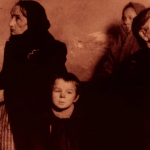
In this review, Yasmina Chaara interrogates Ali Behdad's In A Forgetful Nation: On Immigration and Cultural Identity in the United States and discovers the complicated conceptual processes that constructed the public image of the United States of America. These processes, Chaara argues, are reflected in contemporary digital culture.
In A Forgetful Nation: On Immigration and Cultural Identity in the United States, Ali Behdad surprisingly and cleverly shifts his focus from exploring the conceptions of orientalism and colonialism to a deep scrutiny of the complex yet interwoven linkage between immigration and nationalism in the United States. Inspired by his personal experience and memories of being an immigrant in the U.S., the book attempts to grasp how Behdad, among, other immigrants, survives the trauma of displacement. Even though the latter are being accepted as citizens in America, they discover later that no matter what they do, they are regarded as threatening aliens. The main thrust of Behdad’s argument lies in the inconsistent tension that exists between America and its immigrants. America, which considers itself a nation of immigrants, deliberately relies on historical amnesia to overlook its earlier painful stories that have been inflicted on immigrants. Behdad aptly critiques those paradoxical, mythical depictions, exceptional ideologies, romanticized representations, and exclusionary procedures that have very remarkably relegated immigrants to the periphery and significantly contributed to the formation of the American cultural and national identity.
Drawing on a contrapuntal mode of reading and a postcolonial mode of analyzing, Behdad makes it evident from the very opening lines of his book that his ultimate aim is to examine the collective negation and forgetfulness that America uses not only toward its immigrants but also toward its history of migration. Social repression, political disavowal, cultural marginalization, and historical amnesia, as isolating and bleak as their tone implies, are very paramount in the founding of America as a nation, as an exceptionalist country. It must be clarified that by amnesia, Behdad does not address the natural and innocent act of forgetting, but the deliberate amnesia that ingeniously “retreats from truth to omnipotence” (Behdad 6); brushing aside the violence perpetrated against native Americans, African Americans, and Mexicans. The first chapter, “Imagining America: Forgetful Fathers and the Founding Myths of the Nation”, elaborates par excellence such amnesia by probing how the founding fathers of the U.S. debate over migration prudently champions and deepens this forgetfulness.
The first founding father that Behdad alludes to is Thomas Jefferson, whose benevolence seems to welcome immigrants, particularly those well-talented and industrious who would foster the host nation’s economic and agricultural sectors. However, despite his kind yet selective reception of immigrants, Jefferson remains attentive to the outgrowth of immigrants, fearing that their existence might undermine the political and national unity of America as a country. What is strikingly ironic is that immigrants are needed for their economic contributions, but little attention is given to the economic vulnerabilities and shortcomings they are suffering from. The second founding father, Alexander Hamilton, shares almost the same attitude as Jefferson, for he, too, prefers well-skilled migrants over poor immigrants, while also insisting that immigrants have to overlook and forget their origins and embrace the American identity fully to achieve success. Such a perspective stems from his improvised life, the life that propelled him to migrate to America to forget his alienation. For this particular reason, Hamilton dislikes the arrival of destitute migrants, because it repeats the same trauma of his own impoverished and alienated life. While Thomas Jefferson’s rhetoric of hospitality—although it seems to be superficially friendly toward migrants—requires the omission of the brutality committed against the native people, Alexander Hamilton’s rhetoric of prosperity, on the other hand, demands the excision of the migrants’ roots. Such disremembering and ambivalence are significant for America to be a unified and hegemonic nation.
Mapping out the book chronologically and thematically, Behdad treats each chapter from a distinct lens but intricately reinforces the essential ideas tackled in the preceding sections. In the previous chapter, along with this second chapter, “Historicizing America: Tocqueville and the Ideology of Exceptionalism”, Behdad employs Crévecoeur’s Letters and Tocqueville’s Democracy in America as real examples to divulge how such narratives advertise America as a fertile land of business, prosperity, and dreams. Crévecoeur glorifies America, depicting it in ideal and salutary terms, considering it as the asylum of freedom and a utopian place for migrants to settle in. Such depiction is implied to stimulate, if not to invent, a desire for Europeans to come to America. Tocqueville portrays the latter as an exceptionalist nation with extraordinary citizens. Behdad reminds us that such unrealistic and forgetful accounts of the past contribute to the diffusion of the myth of America. What intrigues Behdad from referring to Tocqueville’s book is to trace the birth of the American democracy, which depends on three principles: the monumentalization of historiography, the cancellation of the past, and the normalization of exclusion. Behdad strongly argues that these principles are chosen selectively, accepting white citizens and excluding black, native and Mexican folks because they are unable to deal with the waves of modernity, revealing that “the democratic nation is built not from noble political practices, but imagined from below as a utilitarian construct” (Behdad 74).
Building on this, in the third chapter, “Immigrant America: Liberal Discourse of Immigration and the Ritual of Self-Renewal”, Behdad sheds light on the advent of the 19th and 20th centuries liberal discourses of migration which render migrants as national agents. Both discourses represent America as a nation that has accepted its past and made peace with its migrants. Such serene acquiescence and incorporation of the figure of the immigrant into the category of a national agent are crucial for the renewal of America to create a plural, multicultural, and hybrid future for itself. But how could the future be planned for when the past is looked at with blind eyes, and the present itself is based on unrealistic perceptions? It is noteworthy to note that even though the liberal discourse of the 20th century acknowledges the pain, the trauma, and the harshness that immigrants endured during the 19th century, offers realistic representations, rather than idealized ones, and recognizes the pivotal role of migrants and migration in enhancing both the socioeconomic and the transnational domains, it lingers Eurocentric, setting up its policy based on terms of class, not race, capital, not nationality, obliteration, not remembering, comfort, not plurality, and xenophobia, not xenophilia.
“Discourses of Exclusion: Nativism and the Imagining of a White Nation” is the fourth chapter in which Behdad traces two anti-nativist movements that normalize the exclusion of newcomers. Whereas the first movement interrogates the ideological constructions surrounding migrants, the second advances a parallel critique by focusing on their medical conditions. Emerging in the mid-19th century, the Know Nothing was the first anti-immigrant movement. What is at stake here is not the roots of xenophobia, for it dates back to the early colonial heritage, but the surprising transformation of the latter into a legitimate and acceptable form of national identity. This movement was believed to be intended to protect the nation from contamination, but it resulted in binary and exclusionary distinctions. “New Immigrants expose the nation to risky diseases,” a sentence that was first articulated by the commissioner general of migration, was rapidly institutionalized as a slogan, embraced first by medical professionals and later on by the general public, giving rise to the eugenics movement, another pseudo-scientific form of segregation. Making its emergence in the mid-20th century, this movement does not attack the migrants’ minds as the previous one did, but their bodies, sanctioning vigilantism to engage all citizens in the battle against the unhealthy immigrant whose arrival would fundamentally distort the physical, mental, and social health of their nation. Migrants’ arrival is once more construed as a threat, not because of their political affiliations, but rather on account of their bodily conditions. Thus, the shift from ideology to medicine, the validation of xenophobia and vigilantism, along with the creation of pseudo-scientific discourses of otherness, reinforces nativist practices that exclude migrants socially, politically, and economically. Be it healthy or impaired, the figure of the immigrant, Behdad immensely affirms, is essential for America to foster its national identity and its medical fields.
Developing this argument further, Behdad begins his final chapter, “Practices of Exclusion: National Borders and the Disciplining of Aliens”, by recalling his own exhausting experience on entering the borders of the U., which began at the age of seventeen years old. Behdad’s border examination was different and sharper than others due to his Eastern roots and features. His personal experience, to be precise, experiences with the borders, lead him to question why migrants, precisely certain nationalities, symbolize different kinds of threats to American security. The border’s inspection assesses the traveler’s credibility not based on reason, but based on former and false stereotypes that are believed to be true about the travelers and their countries. The frontier’s check does not count only on visible modes of searching, but also makes use of those smart technological and digital infrastructures to discipline the migrants, the aliens, and the others. However, Behdad notes that even such modes fail to hinder the migratory flow, because he asserts that the nation delinquently neglects such illegal flow to boost its economic field. Hence, borders, Behdad concludes, are not “a metaphor for subversive transgressions and radical hybrid” (Behdad 134) as some cultural critics have claimed, but are sites for discipline, control, violence, surveillance, and alienation. The law of immigration at the border is “anything but hospitable” (Behdad 15).
One of the book’s significant strengths lies in its coherent blending of interdisciplinary frameworks: history, criticism, culture, and literature. Such multiple frameworks lay bare the historical mechanisms through which the United States has crafted its national and cultural identity. Through these theoretical lenses, Behdad analyzes the history of America with its migrants socially, economically, culturally, politically, and geographically, offering an original and concise critique of the conventional and Eurocentric representations of America’s exceptionalism. Another captivating strength of the book is the call for critical historiography instead of monumentalizing historiography. When revisiting the history of America, Behdad engages critically and deeply with the way the latter has selectively written its own history. This selectivity is what leads to the call for critical historiography, which itself insists on a more honest and critical engagement with the past. The latter is not interested in the past recollections but in its omission to be able to invent an alternative future built on nonracial, attentive, and unforgettable policy.
Although the book provides thought-provoking insights, examining each theme critically and effectively, it fails to offer a well-elaborated discussion on the 9/11 events and their implications on Muslim communities in the U.S. Behdad attentively reflects upon the experiences of Native Americans with land dispossession, African Americans with slavery and Mexicans with radicalized labor exploitation, hinting just slightly to Muslim folks without exploring how the 9/11 incidents lead to islamophobia, racism, and intolerance toward migrants. Behdad firmly argues that America constructs its national identity based on historical amnesia, but he fails to realize that this disavowal could not be applied in the case of the 9/11 events, and that could be plainly seen in the way Muslims have been regarded as terrorists up to this day. The limited discussion of Muslim migrants could have enhanced the book’s scope and added a further understanding of how Muslim migrants, precisely in a post 9/11 context, manage to navigate their religion, culture, and identity in America.
Ali Behdad’s A Forgetful Nation: On Immigration and Cultural Identity in the United States is an important work that examines the interconnection between migration and nationalism in the United States. This relationship between the American nation and its migrants is shaped by a layered history marked by denial and ambivalence. Read through the lens of contemporary digital culture, Behdad’s insights on historical memory are seen as references that assist one to make critical sense of platformisation and digital globalization. This is apparent in platforms such as Instagram, TikTok, and YouTube, where systems of algorithmic ranking and moderation configure visibility and dissemination, often rendering Indigenous voices, subaltern expressions, and local dialects less visible in favor of prevailing global languages. Thus, Behdad’s framework reveals how both national systems and digital systems produce comparable patterns of inclusion and exclusion. Seen in this way, Behdad’s work remains highly relevant not only to migration and cultural studies but also to contemporary debates in digital culture and platform studies, where questions of visibility, voice, and inequality continue to be centrally negotiated.
Cite this review
Chaara, Yasmina. "A Forgetful Nation: On Immigration and Cultural Identity in the United States." electronic book review, 29 September 2026, https://electronicbookreview.com/publications/a-forgetful-nation/